
Treatments
Treatments for Mitral Valve Disease
Treatment for mitral valve disease may include medications, surgery or a combination of both.
Medications
Drugs that control heart rate, fibrillation and blood pressure are often the first line of defense against heart valve disease. Medications cannot prevent the progression of mitral valve disease, however, and surgical repair may ultimately be necessary.
Medications for mitral regurgitation/insufficiency have a limited role—to improve the forward flow of blood and decrease the amount of blood flowing backwards through the valve. Mitral regurgitation/insufficiency is similar to mitral stenosis in that medications can relieve associated symptoms, but cannot prevent the progression of mitral valve disease.ACE inhibitors, beta blockers, blood thinners and vasodilators cannot repair valve damage, but make the symptoms less bothersome. For both conditions, the use of antibiotics before dental appointments is recommended to avoid endocarditis, an infection of the inner lining of the heart.
Your cardiologist will determine what medications will work best for your symptoms. Medications may include:
- Diuretics to promote urination
- Digoxin to help the heart beat more strongly
- Beta blockers to slow the heart rate and reduce the heart's force of contraction
- Blood thinners such as aspirin or prescription medications
Surgical options
Two surgical options are available for the correction of mitral valve disease—mitral valve repair and mitral valve replacement. Each option has its advantages and disadvantages.
Mitral valve repair
 Valvuloplasty may be used to treat stenosis (narrowing) of the mitral valve. During valvuloplasty, a thin catheter (tube) with a balloon tip is used to stretch or open the mitral valve. The catheter is threaded to your heart from the blood vessels in your groin. The catheter placement is guided by X-ray.
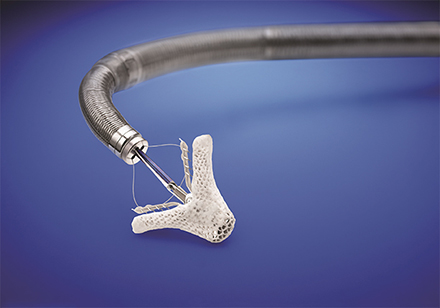
In patients with mitral valve regurgitation, the mitral valve does not close completely, causing blood to flow backward (or “leak”) and creating symptoms of shortness of breath that can be progressive and life-threatening. When severe, mitral regurgitation is often treated with heart valve surgery. For some, however, open-heart surgery is either thought to be ineffective, or the patient is at high risk for complications from surgery. MitraClip is a technology devised to offer minimally invasive treatment for mitral regurgitation in some of these patients.
Mitral valve replacement surgery
 If your mitral valve is damaged beyond repair, you will need to undergo surgery to replace the diseased valve with either a bioprosthetic (tissue) valve or mechanical valve. The decision to choose a tissue valve versus a mechanical valve is based on many factors, including your age, lifestyle and ability to take a blood-thinning medication.

 Chrome
 Edge
Edge Safari
 Firefox