
Temporomandibular Joint (TMJ) and Temporomandibular Disorder (TMD) Therapy
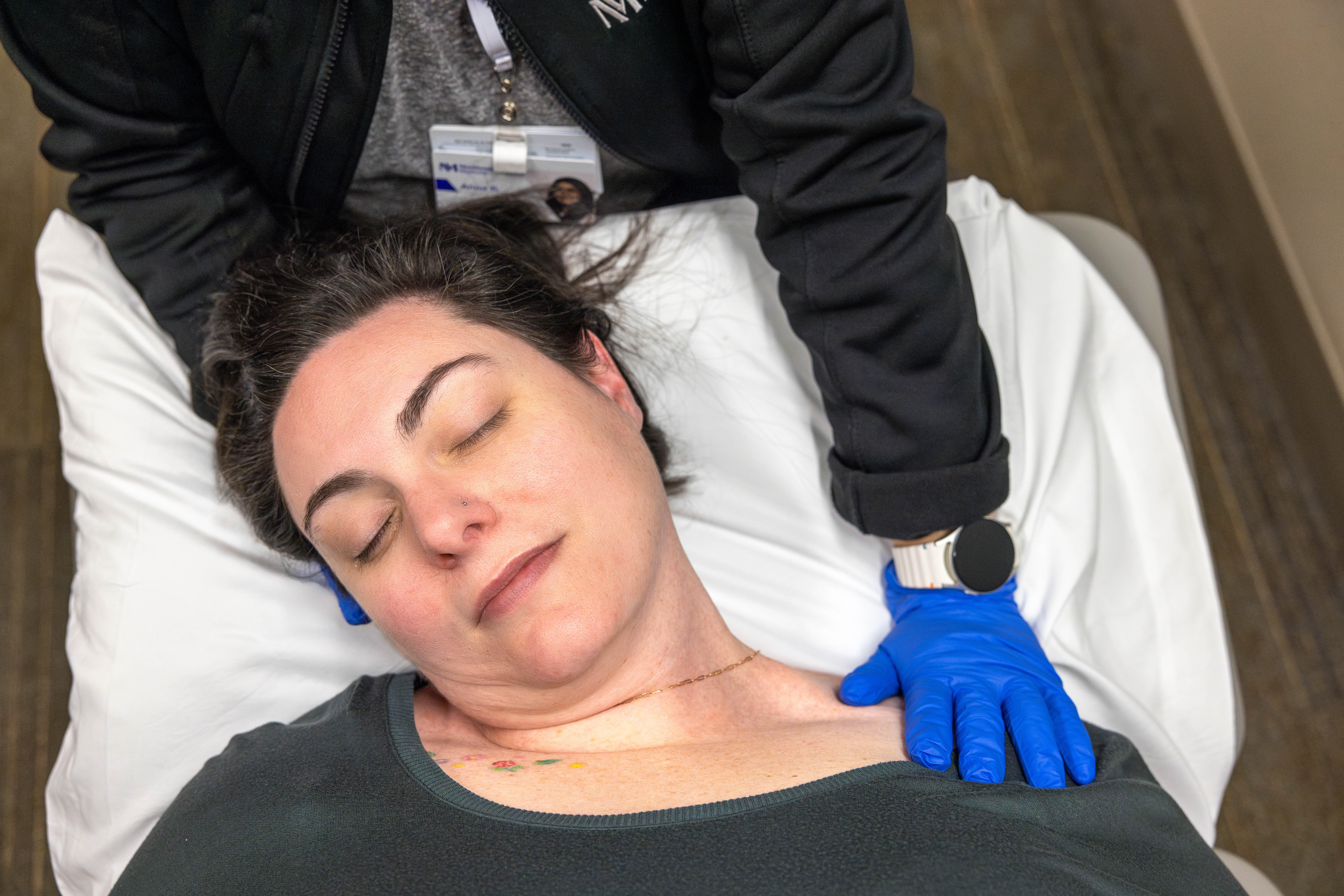
Your jaw joint — called the temporomandibular joint (TMJ) — connects your lower jaw to your skull, just in front of your ears. It helps you talk, chew, yawn and smile.
Sometimes, this joint and the muscles around it can become painful or stiff. This condition is called temporomandibular disorder (TMD), also known as TMJ syndrome. It can be caused by the following:
- Injury to the jaw
- Stress
- Clenching or grinding your teeth
- Poor posture
- Arthritis
- Missing teeth
- An uneven bite (when your teeth don’t line up properly)
TMD and TMJ syndrome can be difficult to diagnose and treat. However, many patients find relief through therapy to help reduce pain and restore their function with daily activities.
Common Signs of TMJ/TMD
- Tenderness or stiffness in your jaw, face, neck or shoulders
- Headaches or migraines
- Clicking, popping or grinding sounds when you move your jaw
- Trouble opening or closing your mouth
- Neck pain
Treatment
Our therapy team will create a personalized treatment plan to reduce pain and help your jaw move smoothly again.Treatment may include:
- Gentle joint movements: Hands-on techniques to help your jaw move more freely.
- Posture training: Learning how to sit and stand in ways that reduce strain on your jaw.
- Aerobic conditioning: Light physical activity like walking or stretching to improve circulation and reduce stress.
- Therapeutic exercises: Simple movements to strengthen and relax the muscles around your jaw and neck.
Schedule a Therapy Appointment
Call 630.933.1500 to learn more or schedule a therapy appointment.
 Chrome
 Edge
Edge Safari
 Firefox