


Bunion Treatment: A Fit for Every Foot
More Advancements May Bring Less Pain
Published July 2025
If you’re living with bunions, simple daily activities like wearing shoes, standing up and walking can be painful. Bunions are a very common foot problem that affects about 23% of 18- to 65-year-olds. And because they’re a progressive disorder, they can get worse if they go untreated.
There is no cookie-cutter treatment for bunions.— Eveline F. Tan, DPM
Taking the First Step to Relieve Pain
According to Eveline F. Tan, DPM, a podiatrist and surgeon at Northwestern Medicine, new advancements in surgical techniques are helping people with bunions get the long-term relief they need.
“Fear and misconceptions can get in the way of finding the right bunion correction solution,” Dr. Tan says. “But if your quality of life is affected, and you can no longer do the things you enjoy, it’s time to look into the minimally invasive treatment options that are available today.”
Before exploring treatment options, it’s helpful to first understand what bunions are:
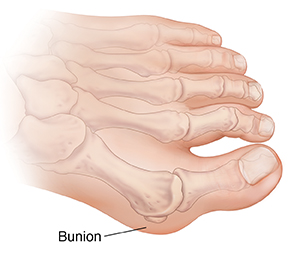
- What is a bunion? A bunion (also called hallux valgus) is a bony bump at the base of the big toe that changes the shape of the foot. The misalignment of the big toe joint can cause the big toe to lean toward the second toe, creating the bump.
When a bunion forms at the base of the little toe, that’s known as a “bunionette” or “tailor’s bunion.”
- Why do they form? Bunions often run in the family due to inherited foot shapes and foot types. Low arches, flat feet and loose joints and tendons increase the risk. Wearing tight, narrower shoes or high heels and being on your feet all day can also play a part in developing bunions.
- What are the symptoms? Foot pain or stiffness, pressure or numbness, redness and swelling, and skin irritation or thickened skin over the joint are common symptoms.
- Can you prevent bunions? Since there’s a mix of different factors that cause bunions, including family history, they can be hard to prevent. Yet opting for well-fitted, comfortable shoes may help bunions from getting worse.
Just as every foot is different, so is the approach to finding relief. For early treatments or mild discomfort levels, Dr. Tan recommends starting with non-surgical solutions.
Easing Bunion Pain With Non-surgical Treatments
- Switch up your shoes. Wearing wider, more comfortable shoes with a bigger toe box can help the toes spread out and relieve pressure on the bunion.
- Get extra support. Using bunion pads, toe spacers or special shoe inserts called orthotics can add more support and may change how the foot is aligned.
- Add ice, medicine and exercise. Applying ice packs to the swollen joint, taking anti-inflammatory medication (like aspirin or ibuprofen) and doing exercises like toe curls, toe circles, toe spreads and heel raises can help lessen pain.
When this type of conservative care isn’t effective and bunion pain makes daily activities feel almost impossible, it may be time to consider surgery.
Exploring Options for Bunion Surgery
“There is no cookie-cutter treatment for bunions,” says Dr. Tan. “Your doctor should be able to give you a personalized plan. And with the minimally invasive options now available, it’s possible to reduce post-surgery pain and even shorten recovery times.”
Bunion surgery typically involves realigning the bones, ligaments and tendons around the big toe. In minimally invasive techniques, surgeons make adjustments with small incisions and specialized tools.
Here are a few ways advanced technology is working to help people get back on their feet after bunion surgery:
- Allows surgeons to address joint misalignment, which is the root cause of the problem
- Removes the need to shift or cut the bone
- Requires smaller incisions
- Decreases the chance of the bunion coming back later in life
Dr. Tan says recovery from surgery varies based on age, activity levels and other factors. Some patients can be mobile in a walking boot within three to 10 days after minimally invasive surgery. And once fully recovered, many return to activities like running, playing tennis and wearing high heels within four to six months.
“Plus, bunion surgeries are covered by most insurance,” Dr. Tan adds. “Many of my patients think it’s a cosmetic procedure and that’s not the case. It’s not about making your feet look pretty; it’s all about improving your quality of life.”
What happens if bunions are left untreated?
Generally, bunions grow larger and more painful over time if left untreated. This may also lead to hammertoes, bone spurs, bursitis (a fluid-filled sac) near the big toe joint and pain in the ball of the foot or knee.
“It’s what I call the ‘domino effect,’” says Dr. Tan. “When one part of your foot is unsound, it has the potential to make other parts of your foot or leg unstable. Push down one problem, and it will pop up somewhere else.”
Dr. Tan suggests that deciding on whether you need surgery really comes down to this: “If your bunion causes pain mentally, physically or emotionally, it’s time to fix it. If it doesn’t hurt you, don’t worry about it.”
Learn more about the basics of bunions.
Make an Appointment
Featured Experts


 Chrome
 Edge
Edge Safari
 Firefox