

Understanding and Managing Meningioma
What a Neurosurgeon Wants You to Know About This Type of Brain Tumor
Published October 2025
Living with a meningioma — one of the most common types of brain tumors — can bring uncertainty and questions. Whether you're newly diagnosed or navigating ongoing care, finding trusted information and support is essential.
Stephen T. Magill, MD, PhD, a neurosurgeon at Northwestern Medicine and director of the Meningioma Center of Excellence at Lou and Jean Malnati Brain Tumor Institute of the Lurie Cancer Center at Northwestern Memorial Hospital, is here to help and answer common questions.
In general, meningiomas are benign tumors, but they can cause major problems.— Stephen T. Magill, MD, PhD
"The first thing people think when they hear they have a brain tumor is, 'Is it cancer?'" says Dr. Magill. "In general, meningiomas are benign tumors and fall into the 'not-cancer bucket.' But they can cause major problems for some folks. So, it's important to seek diagnosis and treatment from experts who understand these types of tumors."
What is a meningioma?
This type of brain tumor grows slowly and forms in the meninges, or the thin layers of tissue that protect the brain and spinal cord. More than 39,000 people each year in the United States are diagnosed with a meningioma.
"A meningioma is the most common primary tumor that forms in the central nervous system, and they don't tend to spread to other parts of the body," says Dr. Magill. "As they grow, they push on the brain as opposed to a tumor that comes from within the brain itself."
There are three grades of meningiomas. The grades reflect how fast the tumor grows, the chance of recurrence and if it's cancerous.
Grade 1
- Most common
- Tumors grow slowly at a rate of about 1 millimeter per year
- Low likelihood of the tumor coming back if treated
- Noncancerous
Grade 2
- Less common
- Tumors grow at a faster rate — between 3 to 6 millimeters per year
- Higher chance of the tumor coming back if removed
- Noncancerous
Grade 3
- Rare (less than 3% of all meningiomas are grade 3)
- Tumors grow fast and may be difficult to treat
- Likely to come back after removal
- Cancerous
What causes a meningioma?
"For most people, we do not know what causes these tumors," says Dr. Magill. "I tell patients there's nothing you did that caused it."
Although meningiomas can affect anyone, they are more common in people who:
- Are female
- Are Black
- Are over age 65
- Have had radiation therapy to the brain or spinal cord areas, especially during childhood
- Have a family history of meningiomas or certain rare genetic conditions like neurofibromatosis type 2 (NF2), schwannomatosis or Gorlin syndrome
What are the symptoms?
Symptoms can vary depending on the size, location and growth rate of a meningioma. Some people with meningioma have no symptoms at all, especially if the tumor is small.
"If it grows where an optic nerve is, for example, it can impair your vision," says Dr. Magill. "Or, if it's pushing on certain spots of the brain, it may cause things like hearing loss or take away your sense of smell. We call these types of symptoms a focal neurological deficit."
Depending on a tumor's size and location, symptoms may include:
- Vision changes
- Hearing changes, including ringing in the ears
- Seizures
- Headaches
- Weakness in an arm or leg
- Loss of balance
- Memory or concentration problems
- Nausea
- Change in personality or behavior
How are meningiomas diagnosed?
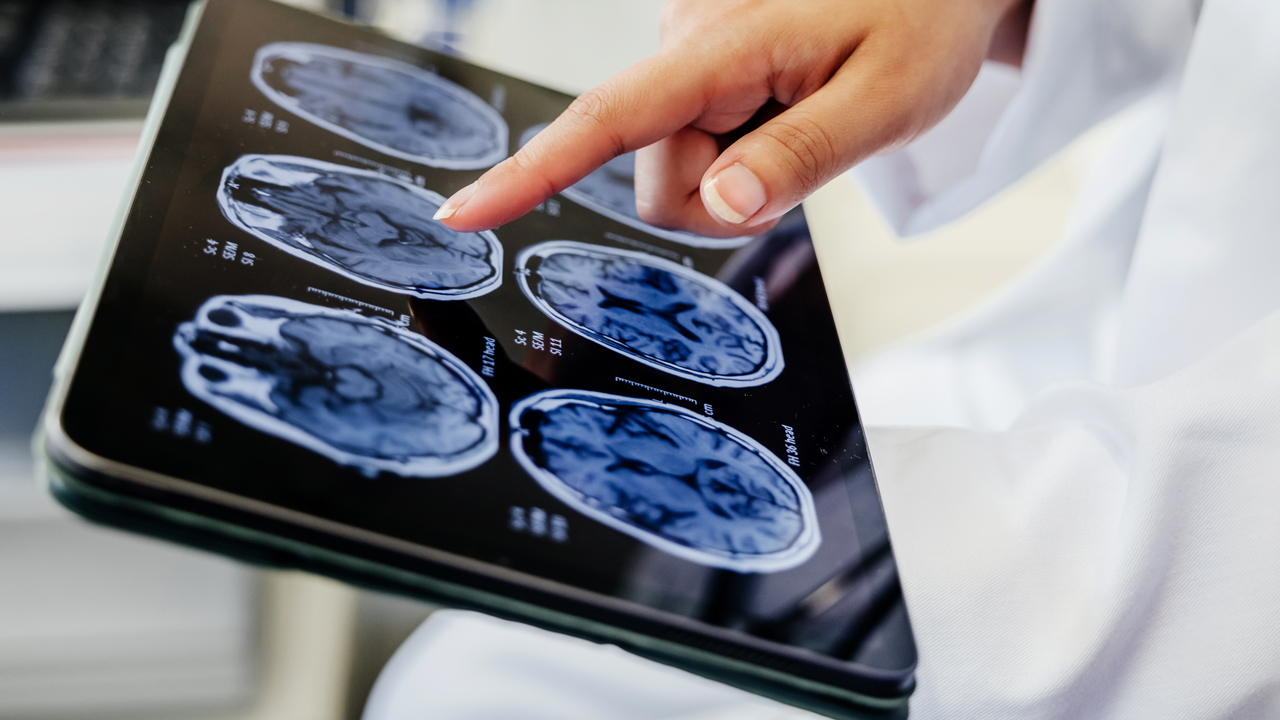
If a physician thinks you may have a brain tumor, they will likely order an imaging test such as MRI or CT scan. Often times, a meningioma is found unexpectedly. You may get an MRI or CT scan for something like ringing in your ears or headaches, and it's discovered with the scan.
Can a meningioma tumor turn cancerous?
It can, but it's rare.
"About 20% of recurrent meningiomas (tumors that come back) will be at a higher grade than they were the first time around," explains Dr. Magill. "They acquire additional mutations or genetic changes that may develop into cancer cells. This is rare, but I do see it from time to time, and we screen for it. I still start the conversation saying this is a non-cancer disease because only 1% to 2% become malignant."
How are meningiomas treated?
"When a person has a meningioma tumor, either you watch it or treat it," says Dr. Magill. "If it's not growing, and it's not causing any symptoms, we typically just watch it closely with CT or MRI scans. If it grows, that pushes us out of the observation category into treatment."
For tumors that require treatment, surgery is the most common option. This is because most meningiomas grow slowly, are noncancerous and typically don't spread to other parts of the body. Surgeons try to remove the entire tumor to lower the chance of it coming back.
When surgery isn't an option:
- If a tumor is in a location that makes surgery risky
- If surgery can remove some but not all tumor cells
- If a person is too sick to have surgery
Radiation therapy may be used to treat the tumor instead. It uses targeted, high-energy rays to destroy tumor cells. There are three main types:
- Stereotactic radiosurgery (SRS): Delivers a high dose of radiation (photons) in one to five sessions. One type of technology used for this is Gamma Knife.
- Fractionated stereotactic radiotherapy (FSRT): Similar to SRS but treats the tumor in 25 to 30 sessions using photons.
- Proton beam therapy: Uses precise beams of protons.
"The type of radiation we treat with depends on the tumor characteristics — where it is and what it's next to," says Dr. Magill. "By far, the workhouse for meningiomas is Gamma Knife radiosurgery. We are lucky to have proton therapy here at Northwestern Medicine and it's a good option for some patients."
What's are the next steps after a meningioma diagnosis?
"Most of the time, this is not an emergency," says Dr. Magill. "You should be able to get a second opinion at a good treatment center to make sure you're doing the right thing. From surgery to radiation options, it's important to have a team that knows how to watch and treat different types of meningiomas, including yours."
Over the last 10 years, there has been significant progress in understanding the biology of meningiomas. Advances in research and imaging technologies are contributing to the development of potential new treatments, including targeted therapies based on the tumor's genetic profile.
"When you seek care at a center of excellence, you have access to brain specialists and clinical trials that push the research forward," says Dr. Magill. "The other aspect of a good meningioma program is the patient outreach and community connections. Even if you have a grade 1 tumor and you've been told not to worry about it, chances are it keeps you up at night. These centers can help you find the support you may need — in more ways than one."
Make an Appointment
Featured Experts




 Chrome
 Edge
Edge Safari
 Firefox