


Sore Throat, Strep or Something Else?
Not All Sore Throats Are Created Equal — Learn the Differences
Published October 2025
Your throat feels scratchy and achy. It hurts to swallow or talk, and your voice sounds hoarse. Occasionally, you have a sharp stab of pain in your tonsils, and you worry: Is it strep or something more serious?
“The good news is that most sore throats are minor pains that will go away in a few days,” says David J. Fox, MD, an internal medicine physician at Northwestern Medicine.
“Strep is rare in adults and young children, and slightly more common in school-age children,” says Dr. Fox.
Most sore throats are due to viruses, causing 85% to 95% of throat infections in adults and children younger than age 5. For children ages 5 to 15, viruses cause about 70% of throat infections, with the other 30% due to bacterial infections, mostly strep, according to the National Institutes of Health.
Is It Just a Sore Throat?
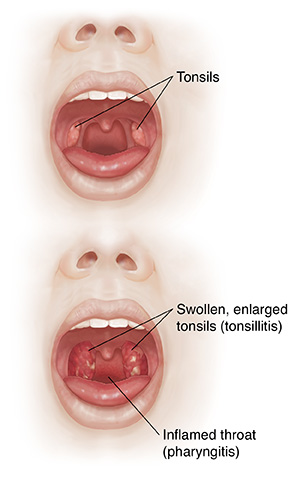
When you have a viral infection, such as the common cold or flu, germs or microorganisms can cause irritation in your throat and a buildup of mucus, which leads to swelling. Most viral sore throats come with other symptoms, such as runny nose, cough, headache and stomachache. Your tonsils may be red or swollen.
Sore throats may also be caused by allergic reactions to pollen, foods, pets and environmental irritants, such as smoke. Overusing your voice — through yelling, prolonged talking or singing — can contribute to laryngitis, another condition that causes sore throat.
“With rest and care, your typical sore throat will likely go away in a week,” says Dr. Fox.
Is It Strep?
Strep throat is a bacterial infection, and you may have a fever as well as a sore throat.
The difference between bacterial and viral infections is that they are caused by different germs: bacteria or viruses. A bacterial infection like strep can be treated with antibiotics, while viruses are antibiotic resistant.
Most sore throats are minor pains that will go away in a few days.— David J. Fox, MD
When you see a physician or healthcare professional, they will first test for a bacterial infection by swabbing your throat and performing a rapid strep test. Results can be available in under 20 minutes.
If the result is positive for strep, your doctor will prescribe an antibiotic. Strep is usually not contagious 24 hours after you start taking antibiotics if your fever has gone away.
If the strep test result is negative, your doctor may screen you for other conditions, including COVID-19, mononucleosis (mono), tonsilitis, tonsil stones and acid reflux.
When Should I See a Doctor?
Healthy adults and children should seek medical help if they have any of these symptoms:
- Temperature of 101 degrees Fahrenheit or higher for two days or more
- Bleeding
- Difficulty breathing
- Inability to swallow
- White spots on tonsils
- Swelling of the face or tongue
- Rash
- Joint pain
- Persistent (more than seven days) or worsening symptoms
For anyone with compromised immune systems, always consult with your healthcare team.
How Can I Relieve My Sore Throat?
“Besides getting rest and drinking plenty of fluids, I recommend my patients gargle with salt water whenever they feel pain or scratchiness in their throat. The salt water helps loosen mucus and wash out the virus,” says Dr. Fox. You can mix 1/4 to 1/2 teaspoon of salt with a cup (8 ounces) of warm water and gargle.
Other ways to soothe a sore throat include:
- Throat lozenges, such as cough drops
- Honey
- Over-the-counter pain relief medications
- Hot or cold drinks, depending on what feels best to you
How Can I Help Prevent Future Sore Throats?
The best way to help prevent sore throats is to maintain a healthy immune system. Wash your hands and try to keep your hands away from your face. Avoid close contact with people who are ill and try not to touch surfaces where germs may linger.Make an Appointment
Featured Experts



 Chrome
 Edge
Edge Safari
 Firefox