


World’s Smallest Pacemaker Supports Heart Surgery Recovery
Tiny Device Helps With Healing — and Then Disappears
Published March 2026
This story was originally released as a Breakthroughs podcast from Northwestern University Feinberg School of Medicine.
Good things do come in small packages.
A tiny pacemaker made by engineers at Northwestern University could change how cardiologists care for children and adults who need short-term help with irregular heart rhythms.
The device is so small it can be delivered through the tip of a syringe and injected into the body. Once inside the body, it works without wires and gradually dissolves over time.
All our evaluations confirm that the technology works very well.— John A. Rogers, PhD
Timely Breakthrough for Temporary Care
Temporary pacemakers are often used after heart surgery. They help manage short-lived bradycardia, which is when a heart beats too slowly.
Today’s standard approach involves sewing electrodes onto the heart and routing wires outside the chest to a pacing box. When cardiologists remove the wires later, scar tissue can tear. This can cause internal bleeding or damage to the heart.
“Wires literally protrude from the body, attached to a pacemaker outside the body,” says Igor Efimov, PhD, professor of Medicine (Cardiology) at Northwestern Medicine Feinberg School of Medicine and professor of Biomedical Engineering at McCormick School of Engineering at Northwestern University. “When the pacemaker is no longer needed, a physician pulls it out. The wires can become enveloped in scar tissue. So when the wires are pulled out, that can potentially damage the heart muscle.”
In some cases, this can lead to serious consequences. For example, astronaut Neil Armstrong experienced internal bleeding after temporary pacemaker wires were removed following bypass surgery.
A Rice-Sized Pacemaker to the Rescue
To address these problems and reduce the risks of open-heart surgery, the research team made a pacemaker smaller than a single grain of rice. It comes with a soft, flexible, wireless patch that sits on the chest.
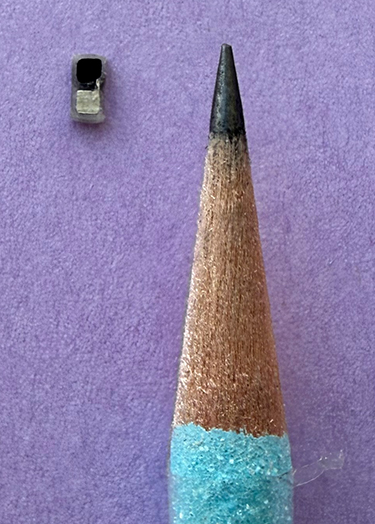
The pacemaker can work with hearts of different sizes. However, it is especially good for the small, delicate hearts of newborns with congenital heart defects.
“We have developed what is, to our knowledge, the world’s smallest pacemaker,” says John A. Rogers, PhD, director of Querrey Simpson Institute for Bioelectronics and professor of Materials Science and Engineering, Biomedical Engineering and Neurological Surgery at Northwestern University. “There’s a crucial need for temporary pacemakers in the context of pediatric heart surgeries, and that’s a use case where size miniaturization is incredibly important. In terms of the device load on the body — the smaller, the better.”
“Our major motivation was children,” says Dr. Efimov. “About 1% of children are born with congenital heart defects — regardless of whether they live in a low-resource or high-resource country.”
The good news, he says, is that these children only need temporary pacing for about seven days after surgery. “But those seven days are absolutely critical. Now, we can place this tiny pacemaker on a child’s heart and stimulate it with a soft, gentle, wearable device. And no additional surgery is necessary to remove it,” says Dr. Efimov.
How the Device Works
The tiny pacemaker pairs with a soft, wireless patch that sticks to the skin on the chest. When the patch senses that the heart is beating too slowly or has an irregular heartbeat, it shines a gentle pulse of light into the body. That light activates the pacemaker and helps bring the heartbeat back to a normal rhythm.
“Infrared light penetrates very well through the body,” says Dr. Efimov. “If you put a flashlight against your palm, you will see the light glow through the other side of your hand. It turns out that our bodies are great conductors of light.”
The pacemaker’s power source is also unique. It uses the body’s own fluids to create the electrical energy it needs. It works like a simple battery that activates once it's inside the body.
The tiny device is just 1.8 millimeters wide, 3.5 millimeters long and 1 millimeter thick. Despite its small size, it provides the same type of electrical stimulation as a full-size pacemaker.
“The heart requires a tiny amount of electrical stimulation,” says Dr. Rogers. “By minimizing the size, we dramatically simplify the implantation procedures, and reduce trauma and risk to the patient.”
Dissolves as the Heart Heals
This pacemaker is made from safe, natural materials that dissolve gradually in the body over time, similar to absorbable stitches. Most pediatric patients who need temporary pacing only require it for about a week. After that, their heart often returns to a normal rhythm on its own.
Because it dissolves, cardiac surgeons do not need to perform a second surgery — a major benefit for newborns and infants with fragile hearts.
What This Could Mean for the Future
By shrinking this device to the size of a grain of rice, the team of scientists at Northwestern University has opened the door to several new possibilities.
Cardiologists may one day be able to place several tiny pacemakers on the heart’s surface to create synchronized pacing for a more natural heartbeat. The technology could also help improve other cardiac implants, such as heart valves, by reducing rhythm problems during recovery.
“Because it’s so small, this pacemaker can be integrated with almost any kind of implantable device,” says Dr. Rogers.
Additionally, scientists believe this technology could support healing in other parts of the body, including nerves, bones and wounds. Human clinical trials could begin within the next several years.
“All our evaluations confirm that the technology works very well,” says Dr. Rogers. “And our team is working aggressively to have this implantable, resorbable device used as a life-saving tool for critically ill patients of all sizes — after passing through the regulatory process — as soon as possible.”
Photo credits: John A. Rogers, PhD/Northwestern University


 Chrome
 Edge
Edge Safari
 Firefox