


Northwestern Medicine Surgeons Develop a Total Artificial Lung System To Keep a Patient Alive for 48 Hours After Removing Both Lungs
Innovative Solution Enabled Lifesaving Double-Lung Transplant
Published March 2026
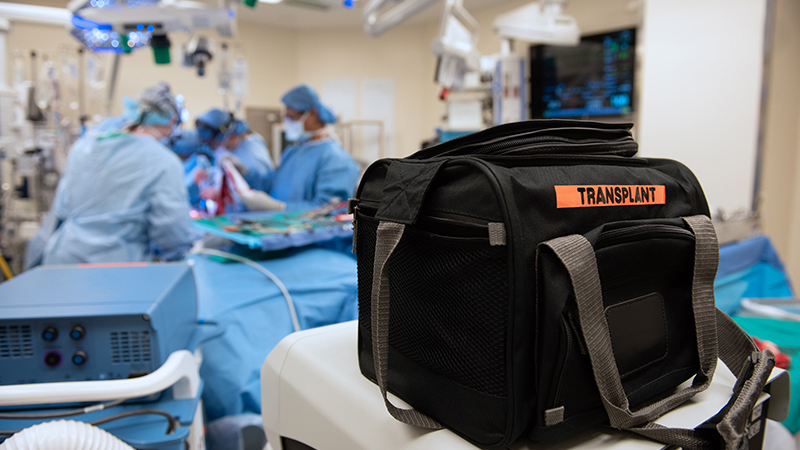
Northwestern Medicine surgeons developed an artificial lung system to keep a patient alive for 48 hours without lungs in his body. Then, they gave him a double-lung transplant after an infection severely damaged his lungs.
In spring 2023, a Missouri resident flew to Northwestern Memorial Hospital on extracorporeal membrane oxygenation (ECMO), a form of advanced life support. What began as lung failure from the flu escalated into severe pneumonia and sepsis.
“He had developed an infection of his lungs that just could not be treated with any antibiotics because it was resistant to everything,” says Ankit Bharat, MD, chief of Thoracic Surgery and executive director of Northwestern Medicine Canning Thoracic Institute. “That infection caused his lungs to liquify and then continued to progress to the rest of his body.”
When the Lungs Are the Source of the Infection
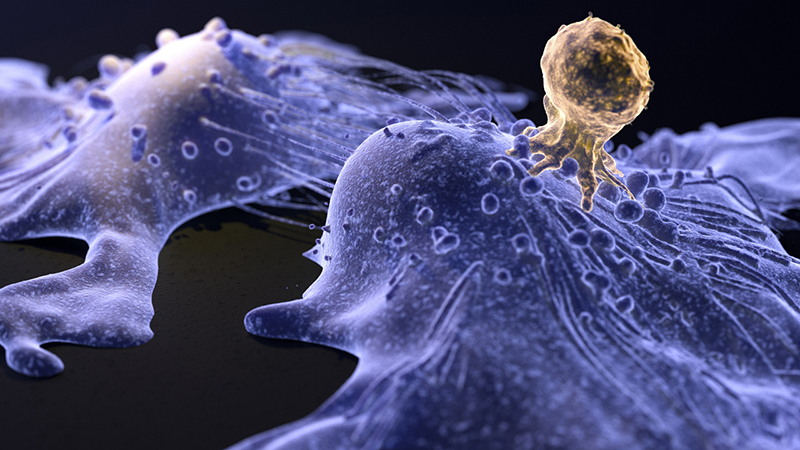
The care team at Canning Thoracic Institute faced a dilemma: The patient’s lungs were the source of the infection and needed to be removed immediately. But without lungs, the body loses critical gas exchange and blood circulation, placing the heart at risk of collapse and potentially causing organ failure.
To solve this problem, the team at Canning Thoracic Institute designed a total artificial lung system that did more than just oxygenate the patient’s blood. The system helped maintain balanced blood flow through the heart. This is essential for survival after the surgical removal of both lungs.
Because an empty chest cavity can cause the heart to shift, the team used temporary internal supports, including breast implants, to help stabilize the heart’s position until transplantation.
Just one day after his team took out his lungs, the patient’s condition started to improve. “His body started to get better because the infection was gone,” says Dr. Bharat. Within 48 hours, the patient was well enough to proceed with transplantation.
When donor lungs became available, the Northwestern Medicine team performed a double-lung transplant using a technique they pioneered during the COVID-19 pandemic to clear infection from the airways and reduce the risk of recurrence.
One Extraordinary Case Shapes the Future of Pulmonary and Thoracic Care
More than two years later, the patient has returned to daily life with excellent lung function. His experience demonstrates how advanced approaches like the total artificial lung can give patients who are in critical condition a chance at recovery.
The team at Canning Thoracic Institute studied his diseased lungs and gathered data that will help save lives in the future. This information will help care teams determine which patients with severe lung infections are good candidates for lifesaving double-lung transplants.
The case, published in Med (Cell Press), describes a “total artificial lung” (TAL) system designed to temporarily replace key functions of the lungs while maintaining stable blood flow through the heart and body.
For patients with severe acute respiratory distress syndrome (ARDS), clinicians often rely on prolonged life support and time, hoping the lungs can recover. But sometimes the lungs themselves become the source of infection and inflammation, driving organ failure and leaving no path forward unless the diseased lungs can be removed and replaced.
Typically, in these scenarios, patients are too unstable to go through removal and transplant at the same time. “With severe ARDS, the conventional strategy is to keep supporting the patient and hope the lungs improve,” says Dr. Bharat. “Using our approaches and data, we can show at the molecular level that some patients won’t recover unless they receive a double-lung transplant.”
Through these innovations in lung support and transplantation, survival is possible for patients facing critical infections when traditional approaches fall short.
Featured Experts


 Chrome
 Edge
Edge Safari
 Firefox