


E-scooter and E-bike Injuries Are Rising
What Every Rider Needs To Know
Published August 2026
Electric bikes (e-bikes) and electric scooters (e-scooters) have become popular for commuting and short-distance travel. But as their popularity grows, so does the number of serious injuries associated with these devices.
A national study showed that scooter-related injuries increased by nearly threefold from 2016 to 2020, and more than half of those injured patients underwent major operations.
Meanwhile, research presented at the 2026 Annual Meeting of the American Academy of Orthopaedic Surgeons found a 300% surge in e-bike youth injuries from 2017 to 2023 in San Diego.
I am seeing more injuries associated with both e-bikes and e-scooters.— Mossub M. Qatu, MD
“I am seeing more injuries associated with both e-bikes and e-scooters,” says Mossub M. Qatu, MD, an orthopaedic surgeon at Northwestern Medicine. “I would say I see more of the e-scooter-related injuries anecdotally, but e-bike injuries have particularly stood out because of the amount of energy involved and the complexity of some of the fractures.”
While the types of injuries may vary, crashes involving either device can be severe and require hospitalization, surgery and months of recovery.
Understanding the Risks
E-bikes and e-scooters may seem like upgraded versions of traditional bicycles and scooters, but their speed and power can be easy to underestimate.
“The convenience and accessibility of these devices can disguise the amount of energy involved. Traveling 20 miles per hour with essentially no protection is not a trivial event,” says Dr. Qatu. “A collision that occurs in a fraction of a second can lead to multiple operations, months without normal weight-bearing, prolonged rehabilitation and permanent limitations.”What can make these devices unsafe?
- They reach high speeds.
- Riders have little protection in a crash, especially if they aren’t wearing a helmet.
- Their small wheels can catch on uneven surfaces, like cracks or potholes.
- They require balance that inexperienced riders may not have developed yet.
- They expose riders to traffic situations that they may not be able to navigate safely.
Because of these risks, the American Academy of Pediatrics recommends that children younger than age 16 not ride motorized e-bikes or e-scooters.
Common E-bike and E-scooter Injuries
When crashes do occur, the injuries can be serious.
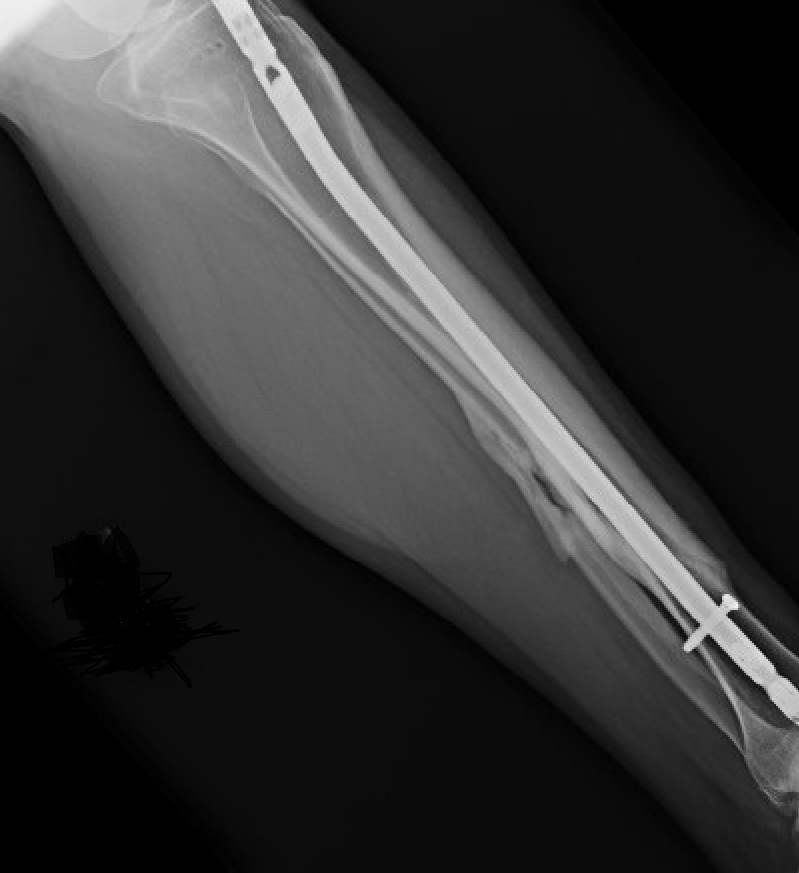
Common injuries associated with micromobility, which refers to the use of lightweight personal transportation devices, such as e-bikes and e-scooters, include:
- Broken bones (or fractures)
- Traumatic brain injury
- Cuts, scrapes and lacerations
- Sprains and strains
In a study of 14,000 micromobility-related emergency department visits in 2021 and 2022, fractures were the most common injury, followed by contusions (bruises) and internal injuries. Among patients with internal injuries, 92% sustained trauma to the head, highlighting the risk of traumatic brain injury.
Fractures are not only the most common injury associated with e-bikes and e-scooters, but they also account for more than half of related hospitalizations.
“The more commonly reported orthopaedic injuries I have seen with these involve fractures around the knee joint,” says Dr. Qatu. “Higher-speed accidents can produce a completely different category of injury: open fractures, fractures extending into a joint, severe comminution in which the bone is broken into many pieces.”
Who Else Is at Risk
Riders aren’t the only ones at risk. Dr. Qatu has also treated older pedestrians who were struck by e-bikes.
“This is an especially concerning group because even a relatively brief collision can produce a major fracture in someone with more fragile bones,” says Dr. Qatu.
Dr. Qatu has seen firsthand how serious these pedestrian crashes can be, with some patients sustaining fractures of the distal femur (the lower end of the thighbone near the knee). “This was not simply a clean break across the bone. The fracture extended into the knee joint and separated the distal femur into multiple displaced fragments,” explains Dr. Qatu.
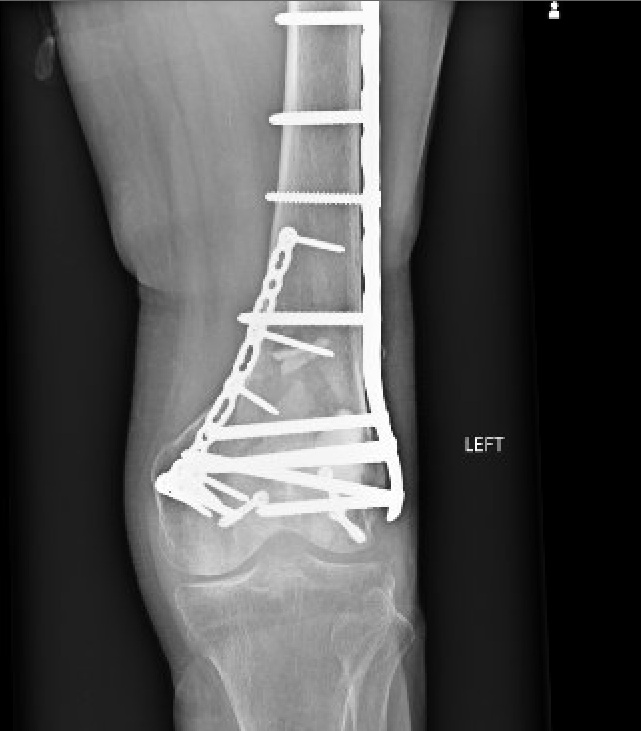
Even with surgery, injuries this severe can result in knee stiffness, post-traumatic arthritis, impaired mobility and a lengthy rehabilitation process.
“These injuries reinforce that e-bikes and e-scooters should not be viewed simply as toys,” says Dr. Qatu.
Fortunately, many crashes and injuries can be prevented by following basic safety practices.
How To Ride More Safely
It’s important to remember that an e-bike or e-scooter is not the same as a traditional bicycle or scooter.
Before riding, take time to learn about how it operates, including how it accelerates, brakes and handles different speeds. Practice starting, turning, and breaking in a safe space. Safety courses are also available, which cover defensive riding techniques, safe braking and other skills.
Here are some other ways to stay safe:
Choose an age-appropriate device
E-bikes and e-scooters come in a variety of models with different speed capabilities. Because of the speeds these devices can reach, riders should choose a model that matches their age, experience and skill level.
E-bikes may use pedal-assist, which means the motor helps propel the bike when you pedal, or a throttle, which allows the motor to propel the bike without pedaling.
In Illinois, e-bikes fall into three classifications:
- Class 1: Pedal-assist only, with a maximum speed of 20 miles per hour (mph)
- Class 2: Pedal- and throttle-assist, with the motor cutting off at 20 mph
- Class 3: Pedal-assist, with the motor cutting off at 28 mph
In Illinois, riders must be at least 16 years old to ride a Class 3 e-bike. The Consumer Product Safety Commission recommends that children age 12 to 15 only ride a Class 1 e-bike if they are ready. For example, they have extensive experience on a traditional bicycle and demonstrate strong judgment. Children age 9 to 12 years should not operate any device that exceeds 10 mph.
Wear a helmet
Helmets are designed to absorb impact during a crash, reducing the risk of serious brain injury. Because e-bikes and e-scooters travel faster than traditional bikes, wearing a helmet is especially important.
Tips for buying a helmet:
- Choose a helmet that is certified by the Consumer Product Safety Commission.
- Look for a helmet with a hard outer shell and an impact-absorbing liner that is at least 1/2-inch thick.
- Make sure the helmet fits comfortably on the head. It should not be able to rock side to side or back and forth.
- Check the helmet’s label to see if it meets the NTA-8776 standard, a safety certification for e-bikes that can reach speeds of up to 28 mph. These helmets are specifically designed for more coverage than a standard helmet.
Stay visible
E-bikes and e-scooters travel faster than traditional bicycles and scooters, which can make it harder for others to judge how fast you are moving. Staying visible helps others see you sooner and avoid turning or moving into your path.
Tips for staying visible:
- Choose routes that are well lit, have wider shoulders in the road and have less traffic.
- Use your front and rear lights and turn them on before it gets dark.
- Make sure your reflectors are clean and visible. Make sure any baskets or accessories do not cover them.
- Add reflective patches or strips to your helmet or clothing.
- Avoid dark clothing at night. Instead, choose high-contrast colors, such as a brightly colored jacket or helmet.
Obey local traffic laws
Not only is it important to be visible to others, but to ride predictably as well. This means following the rules of the road, including traveling in the same direction as traffic, stopping at stop signs and obeying traffic signals.
It’s also worth noting that sidewalk rules for e-bikes and e-scooters vary by state and local jurisdiction. Check your local laws before riding on a sidewalk.
Avoid distracted riding
Distracted riding isn’t limited to texting. Wearing headphones, looking at a phone or carrying a passenger can divert attention from the road and, in some cases, require one-handed riding, which makes it more difficult to maintain balance and control.
Do not operate while intoxicated
Between 2019 and 2022, alcohol was reported in 8.6% of e-scooters and 2.5% of e-bike injury-related emergency department visits. As with driving any vehicle, the use of alcohol impairs judgment and slows reaction times.
Conduct regular maintenance
When you’re driving at higher speeds, braking becomes even more important. Regular maintenance helps ensure your device operates safely when you need it most.
Tips for maintaining your e-bike or e-scooter:
- Avoid letting your battery die, which can damage it.
- Check your tire pressure regularly and make sure your tires are properly inflated.
- Make sure your brakes are in good condition and respond quickly. Try to stop as smoothly as possible to avoid damaging your brakes.
- Check that your lights are working properly.
Respect the Risks
E-bikes and e-scooters can be a convenient and sustainable way to travel, but they should not be treated like toys. They can lead to serious injury, especially when riders underestimate the risks or skip safety precautions.
With the right precautions, riders can enjoy the benefits of these devices while reducing their risk of injury.
“The goal should not be to discourage their responsible use,” says Dr. Qatu. “The goal is to recognize that they require the same respect we give other motorized vehicles: Wear a helmet, understand the device, control your speed, remain visible, avoid distractions and never ride while impaired.”
Featured Experts




 Chrome
 Edge
Edge Safari
 Firefox