


Parkinson’s Disease Symptoms: Early Signs, Motor and Non-motor Changes
How Parkinson’s Disease Affects Movement, Mood, Sleep and Daily Life — and Which Symptoms May Appear First
Updated April 2026
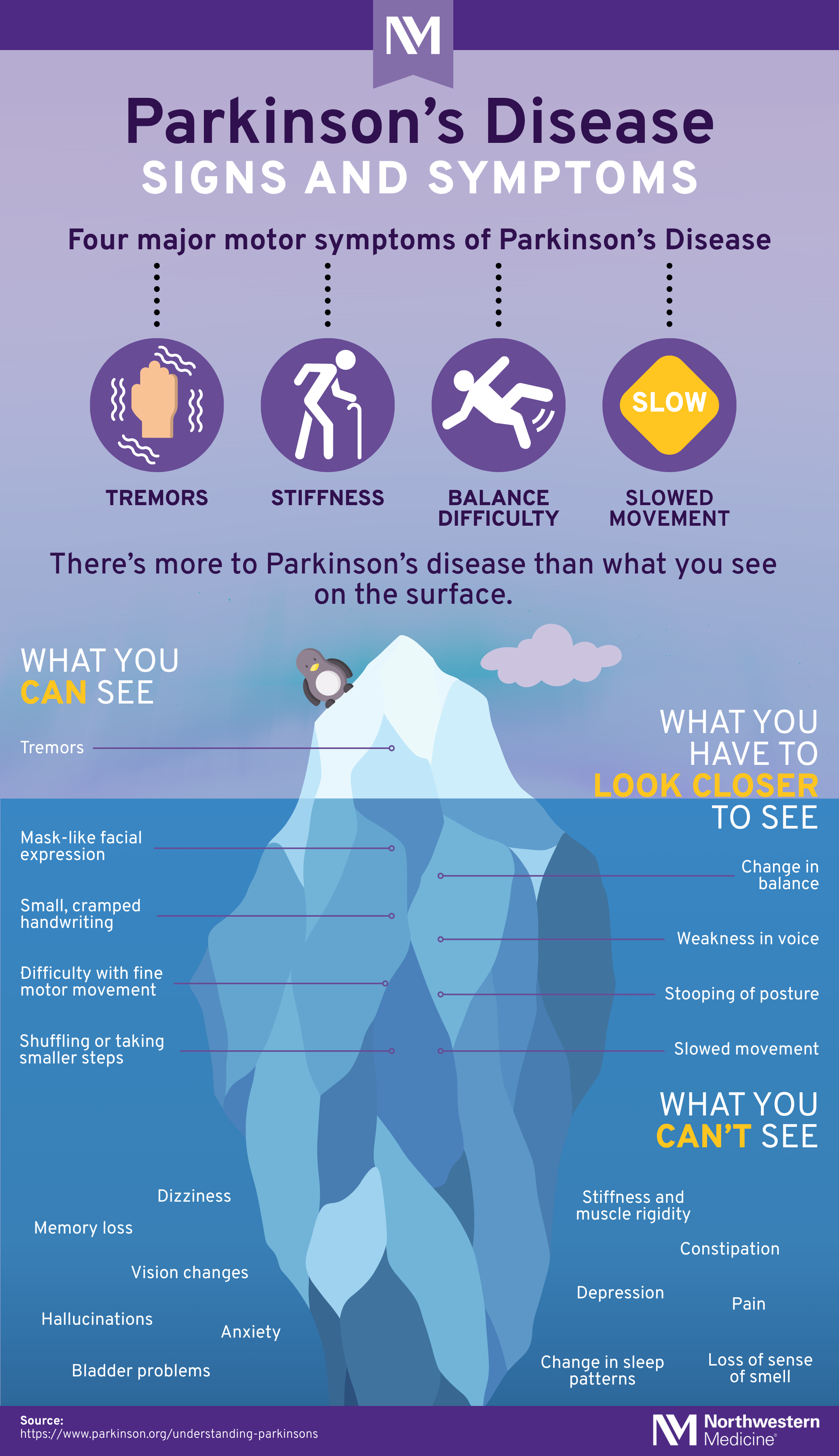
Many people think Parkinson’s disease only causes shaking. While tremor is one possible sign, Parkinson’s disease is a complex movement disorder with many symptoms, some visible and some more hidden. In fact, early symptoms often appear years before a diagnosis and can be easy to miss.
What Is Parkinson’s Disease?
Parkinson’s disease is a brain condition that affects how the body moves. It occurs when certain brain cells gradually produce less dopamine, a chemical that helps control smooth and coordinated movement. Over time, this can lead to changes in movement, balance, mood and even sleep.
Many symptoms can appear years before someone receives a formal diagnosis.— Juan R. Deliz, MD
People with Parkinson’s disease experience symptoms differently. Some develop tremors first, while others notice stiffness, balance problems or non-motor symptoms long before any shaking begins.
Early Symptoms of Parkinson’s Disease
The early symptoms of Parkinson’s often start slowly and may affect only one side of the body. Because these changes are mild at first, they are frequently overlooked or mistaken for normal aging, stress or other conditions.
Early symptoms may include:
- Loss of smell or changes in the sense of smell
- Sleep problems, such as thrashing in bed or acting out dreams
- Constipation or digestive changes
- Mood changes, such as depression and anxiety
- Low blood pressure, which may cause dizziness when standing
- Subtle changes in facial expression
- Small, cramped handwriting
Some of these symptoms may appear years before noticeable movement problems begin.
Common Motor Symptoms of Parkinson’s Disease
Motor symptoms are those that affect movement and are the most well-known signs of Parkinson’s disease. These symptoms often start on one side of the body and may later affect both sides.
The four main motor symptoms include:
- Tremor: Shaking that often starts in a hand or fingers while at rest
- Muscle stiffness: Tight or rigid muscles that can limit movement
- Slowness of movement (bradykinesia): Everyday tasks take longer or feel harder
- Balance problems: Trouble with posture or staying steady while standing or walking
Tremor is common, but it is not always present. In fact, many people with Parkinson’s disease never develop a noticeable tremor.
How Motor Symptoms Show Up in Daily Life
Motor symptoms can affect many everyday activities, such as:
- Difficulty buttoning clothes or picking up small objects with your hands or fingers
- Shuffling when walking or taking smaller steps
- A stooped posture or rounded shoulders
- A soft or weak voice
- Freezing of gait, when the feet briefly feel stuck to the floor
- Swallowing issues
Movement may feel stiff, slow or less automatic, especially on one side of the body.
Facial Expression and Parkinson’s Disease
Parkinson’s can affect facial expression, a change known as hypomimia. The same muscular rigidity that impacts body movement, such as walking, can affect the small muscles of your face, making it difficult to smile, blink or raise the eyebrows.
This can result in a “mask-like” appearance, where you may look serious or tired even when you feel fine. Reduced facial expression can affect your communication and social interactions.
Why Symptoms Often Start on One Side
Parkinson’s disease typically begins when dopamine-producing brain cells are affected more on one side of the brain than the other. Because each side of the brain controls movement on the opposite side of the body, symptoms often appear on one side first.
Over time, symptoms may affect both sides, but the side where symptoms started often remains more affected.
Non-motor Symptoms of Parkinson’s Disease
Non-motor symptoms do not involve movement but are just as important. Because they are less visible, they are often overlooked, even by people who are already diagnosed with Parkinson’s disease.
Common non-motor symptoms include:
- Sleep problems
- Loss of sense of smell
- Depression and anxiety
- Memory or thinking changes
- Bladder or bowel problems
- Pain or fatigue
- Low blood pressure
- Vision changes
How Parkinson’s Disease Affects Mood, Sleep and Thinking
Parkinson’s disease can affect mood and mental health. Depression and anxiety are common with Parkinson’s disease and are not simply reactions to a diagnosis — they are part of the disease itself and related to changes in your brain chemistry.
Sleep problems may include:
- Trouble falling asleep
- Difficulty staying asleep
- Vivid dreams or physical movement
- Talking during sleep
Changes in thinking or memory can also occur as the disease progresses.
Why Symptoms Vary From Person to Person
No two individuals experience Parkinson’s disease in the same way. Symptoms vary based on which brain cells are affected, how quickly the disease progresses and how your body responds to treatment. This variability makes personalized care especially important.
When To Seek Medical Care
If you notice ongoing changes in movement, balance, facial expression, mood or sense of smell, talk with a healthcare professional. Early evaluation with a specialist can help with diagnosis and treatment planning.
“Parkinson’s disease presents itself differently in everyone,” says Juan R. Deliz, MD, a neurologist and movement disorders specialist at Northwestern Medicine. “Many symptoms can appear years before someone receives a formal diagnosis, which is why it’s imperative to be in tune with what’s happening in your body.”
Managing Symptoms
While there is no cure for Parkinson’s disease, both motor and non-motor symptoms can be managed. Treatment may include:
- Medications
- Physical therapy
- Speech therapy
- Mental health support
- Lifestyle changes
Early care can help preserve quality of life and independence for as long as possible.
Paying attention to subtle physical and nonphysical symptoms can help guide timely care and individualized treatment.
“Awareness is one of the most powerful tools people have,” says Dr. Deliz.
Learn more about Parkinson's disease specialists and care centers at Northwestern Medicine.
Make an Appointment
Featured Experts



 Chrome
 Edge
Edge Safari
 Firefox