


German Mom of Twins Travels to Chicago for Life-Saving Lung Transplant After Terminal Lung Cancer Diagnosis
Running Out of Options, Cornelia Tischmacher Found the DREAM Program at Northwestern Medicine
Published September 2025
Eight months after giving birth to twins, Berlin-based art historian and gallerist Cornelia Tischmacher fell ill with pneumonia. Tests in January 2018 revealed she had stage 3 lung cancer — a shocking diagnosis for the otherwise healthy 40-year-old, who is a nonsmoker.
Cornelia’s top priority became clear. “I knew I had to do everything I could to stay alive for my children,” she says.
Her cancer initially responded to surgery and chemotherapy, but by late 2019, it returned. Doctors told her that palliative care with chemotherapy and immunotherapy was the only option to possibly slow down the cancer’s progression.
By June 2024, Cornelia’s condition had significantly worsened. She could no longer breathe without supplemental oxygen. That’s when she discovered the DREAM Program (Double Lung Transplant Registry Aimed for Lung-Limited Malignancies) at Northwestern Medicine.
An Innovative Option for Advanced Lung Cancer
Cornelia was accepted into the DREAM Program, where select patients with advanced lung cancer confined to the lungs can be considered for a double-lung transplant. Northwestern Medicine is one of the only known health systems in the world with a dedicated lung transplant program for patients with advanced cancers limited to the lungs.
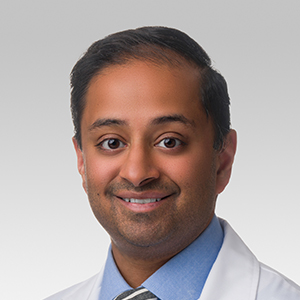
“During our first telehealth visit with Cornelia, it was clear to us that she was at the end of the road,” says Ankit Bharat, MD, chief of thoracic surgery and director of Northwestern Medicine Canning Thoracic Institute. “Cornelia’s cancer continued to progress to stage 4, causing her lungs to fail. A lung transplant was her only option.”
A Life-Changing Journey
In December 2024, Cornelia flew from Berlin to Chicago in an air ambulance. She was admitted to the Intensive Care Unit at Northwestern Memorial Hospital and placed on the transplant waiting list on Christmas Eve. Two days later, on December 26, Cornelia received new lungs.
“She was requiring up to 60 liters of oxygen per minute through her nasal tubes, which is the absolute limit you can supply without a ventilator. For that very reason, we worked around the clock to complete her lung transplant workup and arrange all the logistics needed for her to stay in the United States,” says Krishnan Warrior, MD, a lung transplant pulmonologist at Canning Thoracic Institute.
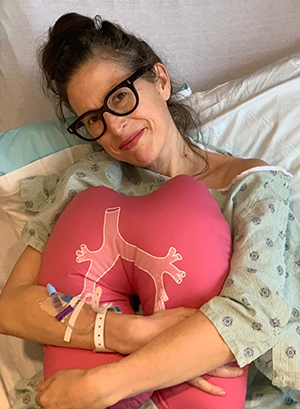
Cornelia calls her transplant the best Christmas gift she’s ever received.
“I remember waking up and thinking for the first time in a long time, ‘I will be able to go to museums and go for bike rides with my kids without bringing an oxygen tank with me,’” says Cornelia. “I could finally breathe again.”
Reuniting With Family
After a week of inpatient hospital care, Cornelia transitioned to an apartment in Chicago to recover and stay close to her care team over a 12-month period. Her husband, Udo Kittelmann, and their twins stayed in Berlin for school and reunited with her during spring break in April 2025.
“Seeing my children for the first time in four months was absolutely wonderful,” says Cornelia. “The weight of my illness had weighed them down, and to see me healthy again was overwhelming — but in a good way.”
Today, Cornelia shows no signs of cancer. She’s walking around town, touring art galleries and breathing on her own. She’s the first patient from Germany to receive a lung transplant at Northwestern Medicine, which has also welcomed patients from Asia, South America, Canada, the Middle East and other parts of Europe.
Screening for Lung Cancer
Lung cancer is the leading cause of cancer-related deaths in the United States, with more deaths than colon, breast and prostate cancers combined.
“Conventionally, lung cancer has been associated with smoking and older age,” says Dr. Bharat. “While smoking certainly increases your chances of developing lung cancer, we’re seeing an explosion of lung cancer cases in patients who have never smoked or had limited smoking exposure — like Cornelia.”
Early detection through screening is key and can significantly improve your survival rate.
To extend screening to more people, Canning Thoracic Institute started a special lung cancer screening program for patients’ friends and family members who may be at risk for lung cancer based on factors outside of national screening guidelines. People who meet certain criteria can get screened for lung cancer, even if their insurance doesn’t cover the cost.
Learn more about how to pursue lung cancer screening.


 Chrome
 Edge
Edge Safari
 Firefox