
Delivery and Newborn Care
We measure cesarean births (C-sections) among low-risk pregnant patients. Low-risk means those who are full term (40 weeks), pregnant for the first time and have only one baby in the womb in a head-down position.
We track this measure to:
- Reduce unnecessary C-sections in first pregnancies
- Improve outcomes for the parent and baby
- Decrease the chance of future C-sections
- What is this measure?
- How does Northwestern Medicine perform?
- What is Northwestern Medicine doing to improve these measures?
- How can you support quality care and patient safety?
What Is This Measure?
C-sections can increase the risk of serious health issues. Plus, repeat C-sections can lead to long-term complications like placenta accreta, a serious and potentially life-threatening pregnancy condition.
We monitor the number of C-sections that first-time parents with low-risk pregnancies receive. This helps us prioritize the safety and well-being of parents and babies.
How Does Northwestern Medicine Perform?
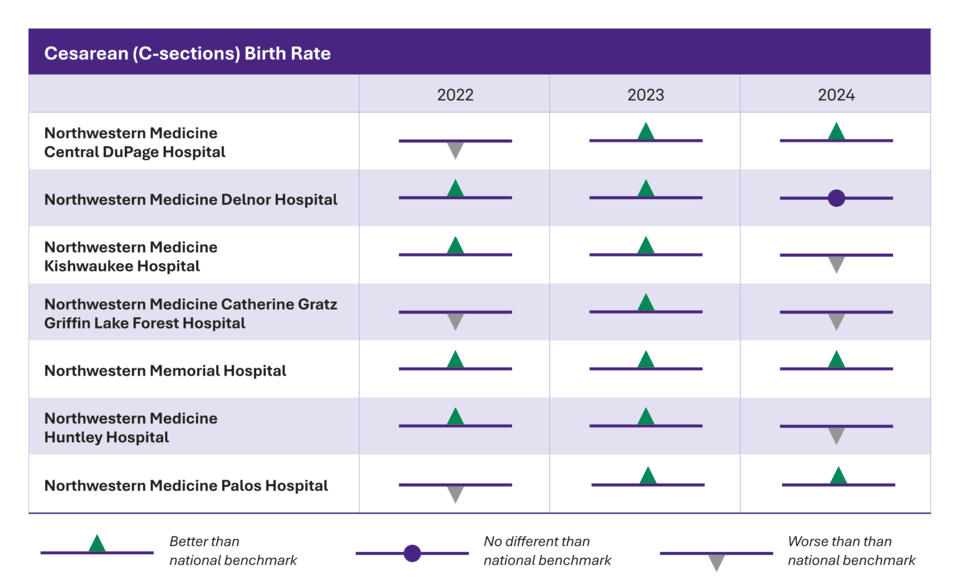
What Is Northwestern Medicine Doing to Improve This Measure?
Our goal is to improve your patient experience by providing safe, high-quality care. We use evidence-based best programs to promote vaginal births and to reduce cesarean section (C-section) deliveries to decrease the risk of long-term complications.
 Chrome
 Edge
Edge Safari
 Firefox