
Infection Prevention
We are committed to protecting patients from hospital-associated infections that require treatment. This includes:
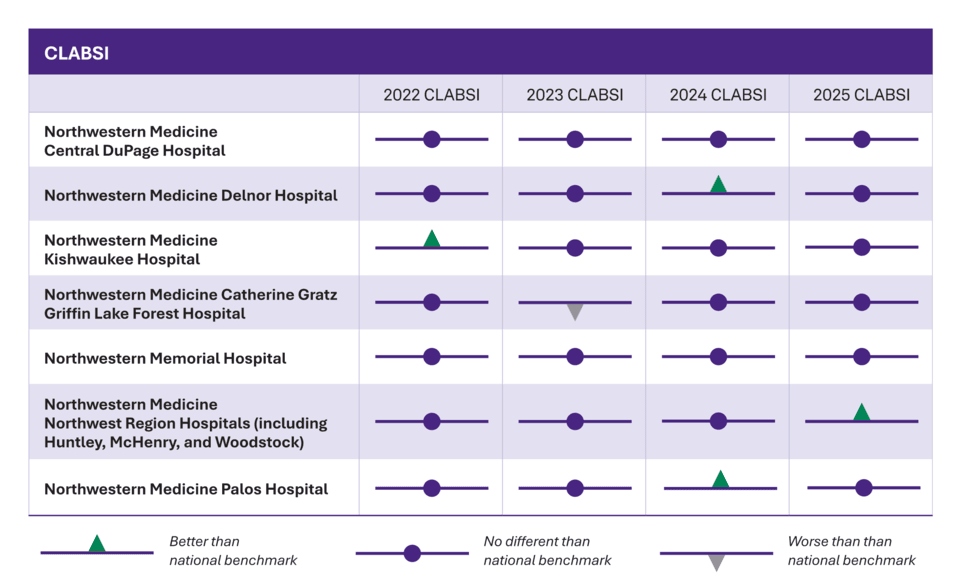
- Central line-associated bloodstream infections (CLABSIs): These happen when bacteria or other microorganisms enter the bloodstream through a central venous catheter.
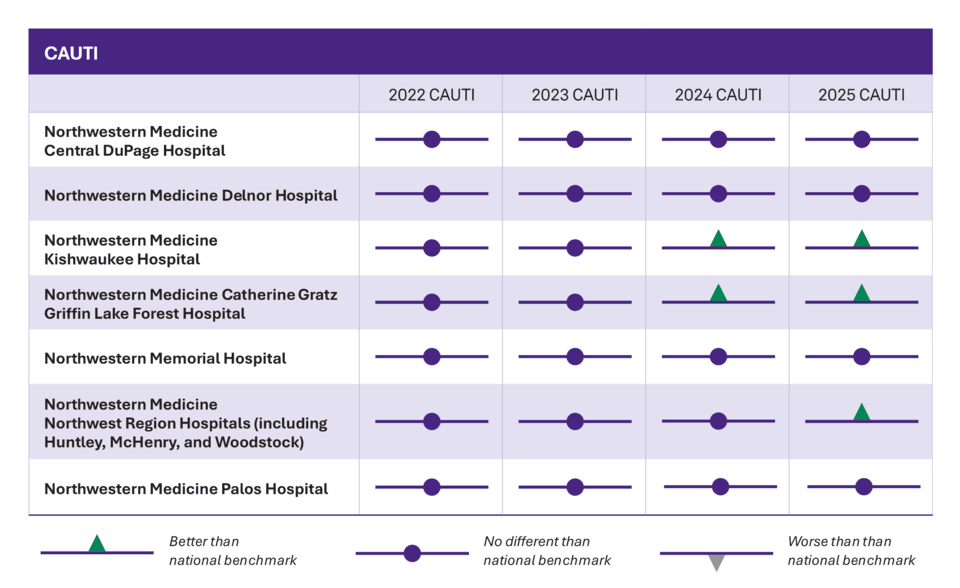
- Catheter-associated urinary tract infections (CAUTIs): These happen when bacteria enter the urinary tract through a urinary catheter.
We can prevent most of these infections by following the correct procedures for inserting, cleaning and caring for a central line.
- What is this measure?
- How does Northwestern Medicine perform?
- What is Northwestern Medicine doing to improve these measures?
- How can you support quality care and patient safety?
What Is a Catheter-Associated Urinary Tract Infection (CAUTI)?
A urinary tract infection (UTI) is an infection that involves the urinary system, including the urethra, bladder, ureters and kidney. A CAUTI is a UTI associated with the use of a urinary catheter. A urinary catheter is a tube we insert into the bladder through the urethra to drain urine.
- Between 15% and 25% of hospitalized patients get urinary catheters during their hospital stay.
- About 75% of hospital-associated UTIs are associated with a urinary catheter.
Catheters should only be used for appropriate conditions. They should be removed as soon as they are no longer needed. The longer a patient has a urinary catheter, the higher their risk of getting a CAUTI.
What Is a Central Line-Associated Bloodstream Infection (CLABSI)?
A CLABSI is a serious infection that happens when germs (usually bacteria or viruses) enter the bloodstream through a central line. We use central lines to give medication or fluids to hospitalized patients, or to take blood.
There are strict guidelines that clinicians follow when inserting, checking or changing a central line. It’s important to keep central lines sterile and to insert them correctly to avoid CLABSIs.
CLABSIs can cause fever and red skin and soreness around the central line. We can do a test to see if a patient has a CLABSI.
How Does Northwestern Medicine Perform?
What Is Northwestern Medicine Doing to Improve This Measure?
Our goal is to improve your patient experience by providing safe, high-quality care. We use evidence-based programs to prevent hospital-acquired infections and adverse events. We also support our patients, their families and our staff throughout the care journey.
If there are issues:
- We respond quickly with plans that include process improvements, staff training and extra support
- We keep executive leaders informed and accountable
Additionally, we learn from other health systems and share lessons across our organization. Patient safety, privacy and improvement are at the center of everything we do.
 Chrome
 Edge
Edge Safari
 Firefox