
High-Dose-Rate (HDR) Brachytherapy
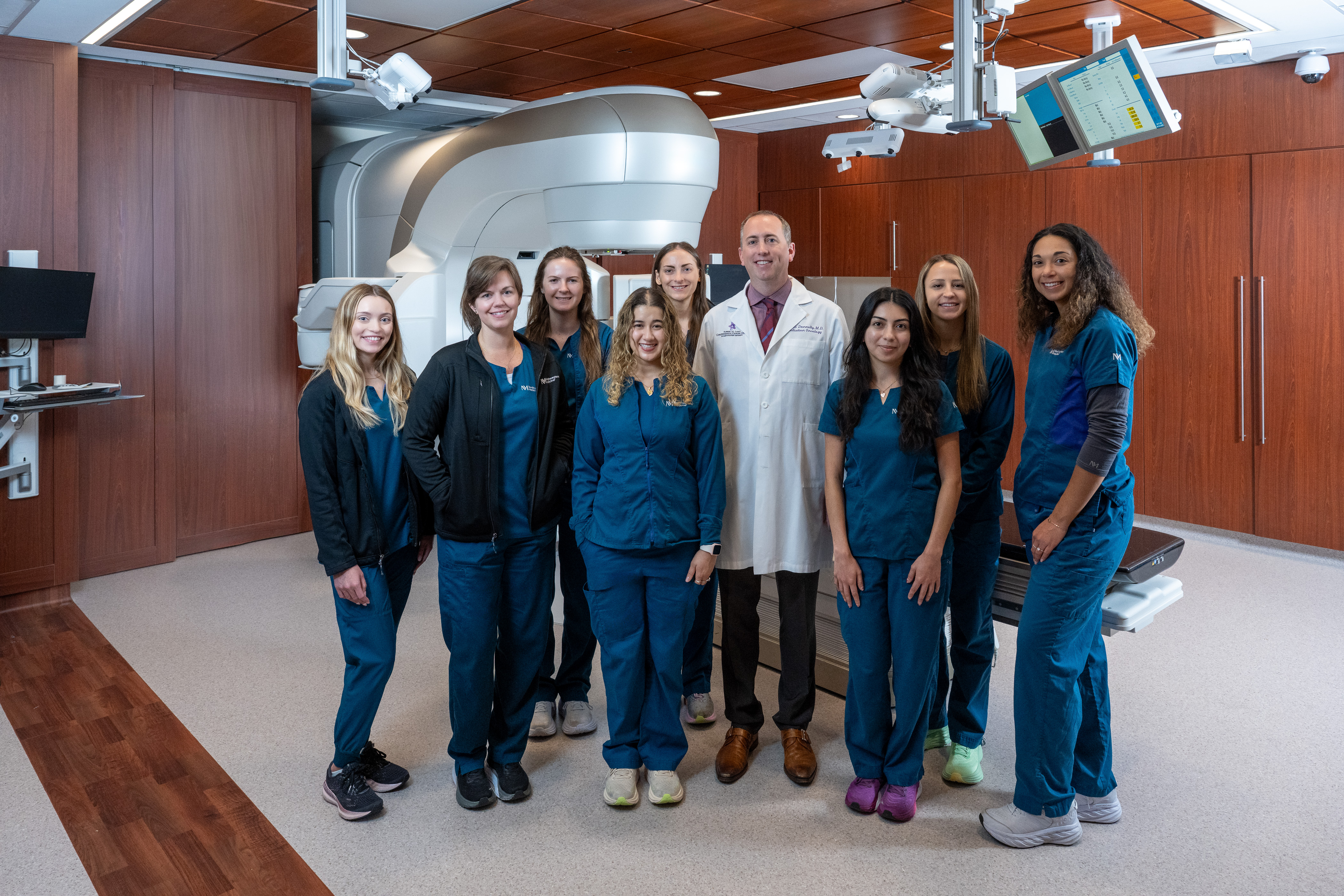 HDR brachytherapy places a temporary radiation source inside or next to the tumor. The source remains in place for minutes while the dose is delivered, then is safely removed. We use HDR for prostate, gynecologic, breast, skin and certain soft-tissue cancers, often in an outpatient setting.
The dose of radiation (number of seeds) and length of time prescribed will depend on the tumor size, location and sensitivity to radiation. With high-dose rate (HDR) brachytherapy, we first place thin catheters in the tumor. The catheters are then connected to an HDR afterloader. This machine contains a single highly radioactive iridium pellet at the end of a wire. The seed is pushed into each of the catheters one by one under computer control.
The computer controls how long the seed stays in each catheter and where along the catheter it should pause to release its radiation. With a few well-placed catheters in the tumor, HDR brachytherapy can provide a very precise treatment that takes only a few minutes. After a series of treatments, we remove the catheters, and there are no radioactive seeds left in the body.
Brachytherapy may be used alone or in combination with external beam radiation and/or surgery. It may cure, control or relieve symptoms of many different types of cancer. Some of the tumors Northwestern Medicine specialists treat with brachytherapy are:
- Prostate cancer
- Breast cancer
- Lung cancer
- Esophageal cancer
- Gynecologic cancers
- Anal/rectal cancers
- Sarcomas
Next step: Schedule a consultation with your Northwestern Medicine radiation oncologist to learn whether HDR brachytherapy may be appropriate for your cancer type.
To learn more, visit radiation oncology.
Related Resources
Websites
- What Is Brachytherapy?: Learn more about how brachytherapy can be used to treat cancer.
- Types of Brachytherapy: Learn more about different types of brachytherapy and the different radiation precautions.
Downloads
- Intra-Cavitary Implants: A Woman’s Self-Care Guide: Learn more about preparing for intra-cavity implants.
 Chrome
 Edge
Edge Safari
 Firefox