


Abnormal Vaginal Bleeding Signals Rare Cancer in Teen
Spanish-Speaking Cancer Care Team Supports Family Through Treatment of Clear Cell Carcinoma
Published February 2026
At 14, during the peak of the COVID‑19 pandemic, Liliana “Lili” Castaneda thought she had her first period. She was excited until the monthly bleeding soon turned into daily bleeding. Liliana was bleeding so much that she would soak through pads in about 15 minutes and would get dizzy when she stood up.
Liliana went to a local doctor, who told her the bleeding was just stress from the pandemic. She trusted her instincts and pushed for more answers.
A Surprising Diagnosis
One month before her 15th birthday, Liliana was diagnosed with a rare vaginal cancer called clear cell carcinoma. Under a microscope, the cancer cells appear clear. This type of cancer is most commonly found in the female reproductive system in women after menopause.
“In my 15 years of practicing medicine, Liliana is the youngest patient I’ve treated for clear cell carcinoma — most of my patients are in their 60s,” says Dario R. Roque, MD, a gynecologic oncologist at Robert H. Lurie Comprehensive Cancer Center of Northwestern University at Northwestern Memorial Hospital.
What Can Cause Clear Cell Carcinoma of the Vagina?
Clear cell carcinoma of the vagina is rare, and in many situations, such as Liliana’s, the exact cause cannot be identified.
Unlike many other gynecologic cancers, clear cell carcinoma of the vagina is typically not associated with HPV (human papillomavirus) infection or smoking. Clear cell carcinoma of the vagina is also not a childhood cancer. Because of this, pediatric hospitals in Chicago would not accept Liliana as a patient.
Adding another layer of complexity, Liliana’s mother only speaks Spanish. So, it was also important to find a care team at a Spanish-speaking cancer care center who could communicate with the family throughout treatment.
Meeting Liliana’s Spanish-Speaking Care Team
Northwestern Medicine welcomed Liliana as a patient. Dr. Roque, who is from Cuba and speaks Spanish, was able to speak directly with Liliana’s mother at each visit. Liliana’s treatment plan included chemotherapy and radiation therapy.
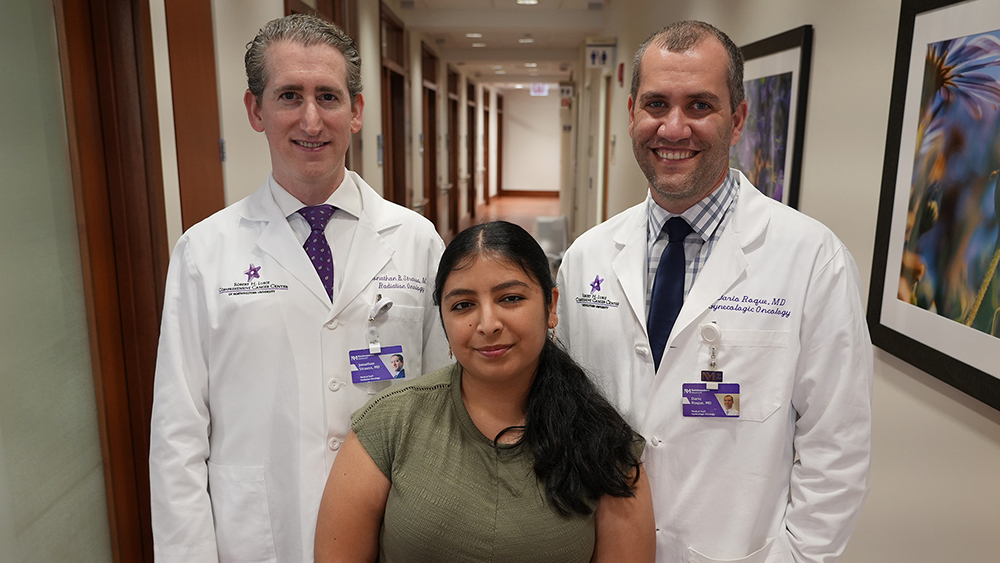
Jonathan B. Strauss, MD, Liliana’s radiation oncologist at Lurie Cancer Center, oversaw her external beam radiation therapy and brachytherapy. Brachytherapy is a type of internal radiation therapy in which a small radioactive implant is placed inside the body to deliver radiation directly to the tumor.
“Liliana’s tumor was about the size of a golf ball,” says Dr. Strauss. “At the time of her diagnosis, the tumor was too large for us to surgically remove, so we had to use external and internal radiation therapies to shrink it. It took a lot of radiation to get rid of her tumor, along with chemotherapy.”
Teen Cancer Survivor
Liliana responded exceptionally well to treatment and was declared cancer‑free in March 2021. Today, she is a cancer survivor.

Paying It Forward
Inspired by her Northwestern Medicine specially trained care team, Liliana has set her sights on a career in health care.
“I can’t wait to become a nurse and help other kids navigate their medical journey,” she says.
“We knew Liliana would do great things no matter what,” says Dr. Strauss. “But when she told us she wanted to go to nursing school, the entire Northwestern Medicine team that took care of her was very touched.”
Signs of Vaginal Cancer
Liliana and her doctors want women and teens to know vaginal cancer symptoms. You should contact a healthcare professional if you or a loved one experiences:
- Abnormal vaginal bleeding
- Bleeding between periods
- Bleeding after menopause
- Pelvic pain or pressure
- A lump in your vagina
- Urinary symptoms
These symptoms may be caused by vaginal cancer, including clear cell carcinoma, or another health condition. If you are concerned about any of these issues, talk with your doctor.
When Is Vaginal Bleeding Abnormal?
Heavy bleeding may need treatment if:
- You have to change your tampon or pad more than once every one to two hours
- Your period lasts longer than seven days
- You or a family member has a bleeding disorder
- You feel dizzy or faint
Liliana hopes her story reminds others, especially teens, to trust their instincts.
“If you feel like something is wrong, don’t hesitate and get it checked out,” she says.




 Chrome
 Edge
Edge Safari
 Firefox