


Cardiac Arrest After Childbirth: How One Chicago Mom Survived
Coordinated Care Team Acts Quickly To Treat a Life-Threatening Pulmonary Embolism
Updated June 2026
Chelsea Cheveria and her husband Scott were welcoming their second child on February 10, when a routine delivery quickly became a medical emergency.
“Everything was routine, the baby was out and Chelsea was holding her,” says Robbye D. McNair, MD, an OB-GYN at Northwestern Medicine who delivered Chelsea’s baby. “We were about to close the next-to-last layer of the procedure when Chelsea went unresponsive.”
I gave my daughter a kiss and it all went black.— Chelsea Cheveria
A Rare Emergency After Delivery
Following a successful cesarean section (C-section), Chelsea developed blood clots in her lungs that immediately sent her into cardiac arrest. Her team at Northwestern Medicine Prentice Women’s Hospital performed four rounds of CPR, but she was still unresponsive.
“I remember my husband saying, ‘You did it, I love you.’ Then I gave my daughter a kiss and it all went black,” says Chelsea.
Blood pressure medication helped get her heart pumping again, but the life-threatening clots in her lungs, called a pulmonary embolism, were putting intense strain on her heart.
A pulmonary embolism can make it hard for the body to get oxygen. It can quickly become life-threatening and may lead to cardiac arrest, which is when the heart stops beating.
Cardiologists at Northwestern Medicine Bluhm Cardiovascular Institute had to work quickly to remove the clots through a procedure called an emergency thrombectomy and keep her heart from stopping a second time.
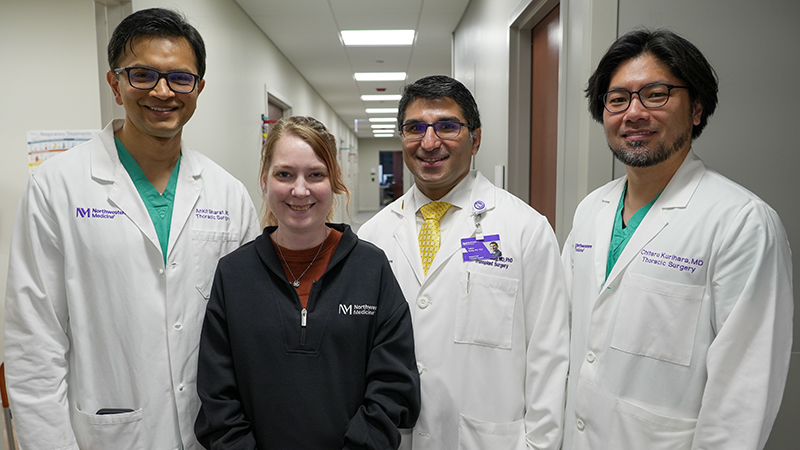
Before Chelsea’s thrombectomy could be performed, the care team had to first address another issue — life-threatening bleeding from an artery in her uterus. Daniel R. Schimmel, MD, director of the Pulmonary Embolism Response Team, swiftly coordinated a treatment plan.
Robert J. Lewandowski, MD, an interventional radiologist, first performed an emergency uterine artery embolization to stop the bleeding, allowing Chelsea to take the anticoagulants (blood thinners) needed for a thrombectomy. Keith H. Benzuly, MD, an interventional cardiologist, then began a thrombectomy to clear the clots. During the highly specialized procedure, a catheter was run from Chelsea’s leg up through a blood vessel, through her heart and into her lungs.
“This was a life-threatening emergency,” says Dr. Benzuly. Thankfully, the procedure was a success. The blood clots were cleared, and Chelsea’s heart was finally stable.
Signs of Blood Clots During Pregnancy
A blood clot in a lung is one of the most common causes of pregnancy-related deaths in the United States. Those who have a C-section are nearly twice as likely to have this risk. While clotting is a known complication, Dr. McNair says it’s still rare. “I want to reassure patients that these are rare events, and most deliveries are uncomplicated.”
Still, it’s important to be aware of the signs of a blood clot.
Additional risk factors for blood clots during pregnancy include:
- A past blood clot or family history of blood clots
- Being overweight
- Pregnancy with twins or more
- Taking medications that increase the risk of clotting
- Limited activity due to bed rest, recovery after delivery or long-distance travel
- Diabetes
- High blood pressure
- Smoking
Talk with your care team if you have these risk factors. They may recommend steps to help lower your risk.
Watch for these symptoms
If you are pregnant or have recently delivered a baby, seek medical attention right away if you notice these signs of blood clots:
- Sudden shortness of breath
- Leg pain or soreness
- Redness or color changes in the leg
- Skin that is warm to the touch
- Sudden, unexplained swelling in the legs, usually only in one limb
- Chest pain
- Coughing up blood
- Rapid or irregular heartbeat
How Blood Clots Are Treated
Treatment depends on how serious the clot is and the patient’s individual risk factors. Most patients receive blood thinners, which help prevent new clots and stop existing ones from growing.
In severe cases like Chelsea’s, doctors may perform procedures to remove the clot right away.
Life After a Pulmonary Embolism
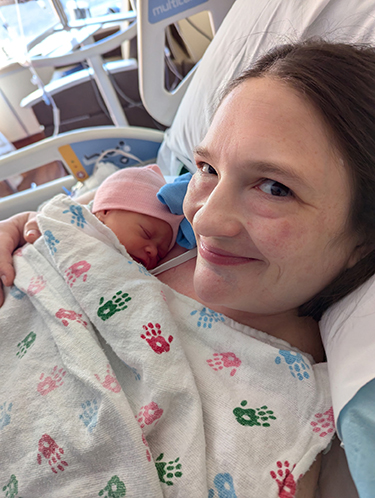
Less than a day after her heart stopped, Chelsea was awake — although in pain. Shortly after, her baby girl was back in her arms, right where she belonged.
“Once I woke up and held her again, I was never letting go,” says Chelsea.
Chelsea spent just five days in the hospital before being discharged to her home in Chicago.
Recovery after a pulmonary embolism often includes:
- Follow-up care with specialists
- Taking blood thinners for a period of time
- Monitoring heart and lung health
Can You Have Another Pregnancy After a Blood Clot?
In many cases, yes. Most people can safely have another pregnancy, though they may need extra monitoring.
Your care team may recommend:
- Preventive blood thinners
- Close follow-up during pregnancy
- A personalized care plan
Chelsea is hopeful about the future and thinking about a third child. “I'm not afraid to go again. I just love being a mom,” she says.
Make an Appointment
Featured Experts





 Chrome
 Edge
Edge Safari
 Firefox