


Serving Size vs. Portion Size: What’s the Difference?
Why Paying Attention to Portions Can Improve Nutrition
Updated October 2026
When it comes to healthy eating, how much you eat matters just as much as what you eat. The amount of food on your plate can affect your energy levels, weight and overall health.
It can be easy to eat more than you realize, especially when portions are larger than what your body needs. Knowing the difference between serving size and portion size can help you make more informed decisions about the food you choose at meals and snacks.
Portion food into a bowl or plate, rather than eating it directly from the package.— Hannah Gould, MS, RD, LDN, CDCES
Serving Size vs. Portion Size: What’s the Difference?
Some people are surprised to learn that serving size and portion size are not the same thing.
A serving size is a set amount of food listed on a product’s nutrition label. It tells you how many calories and nutrients are in that specific amount of food.
Serving sizes are usually measured in cups, ounces, grams or pieces. Sometimes a serving size may be smaller — or larger — than expected.
A portion size is the amount of food you actually choose to eat at one time, whether you’re eating at home, dining out or grabbing a snack on the go. Your portion may be equal to, smaller than or larger than the serving size listed on the nutrition label.
For example:
- A serving of cereal might be 1 cup, but you pour 2 cups into your bowl. In that case, your portion is two servings.
- A bag of chips may contain 10 servings, even though it can be eaten in one sitting.
A simple way to remember the difference: Serving size is what’s on the label. Portion size is what’s on your plate.
Recognizing this difference can help you better understand nutrition labels and make more informed eating decisions.
Why It’s Important To Pay Attention to Serving Size
Learning to pay attention to serving sizes can help put the information on a nutrition label into context. Without paying attention to serving sizes, it’s easy to:
- Eat more calories than you realize.
- Get more sugar, sodium or saturated fat than expected.
- Make less balanced food choices.
A nutrition label can be a helpful tool for checking calories, nutrients and serving size, but only if you know how to use it. Checking the number of servings per package can be a good starting point.
How Serving Size and Portion Size Affect Calories and Nutrition
Both serving size and portion size can impact your overall nutrition. For example:
- Eating two servings doubles calories and other listed nutrients.
- Larger portions can make it easier to consume more calories than your body needs.
- Smaller portions may leave you feeling hungry, which can lead to snacking later.
Over time, these habits can make it more difficult to maintain a healthy diet or reach your health goals. Being aware of serving sizes and portion sizes can help you build healthier eating habits.
Foods That Can Lead to Larger Portions
Some foods are easy to eat in larger portions without realizing it, especially when they’re eaten straight from a package or container. Common examples include:
- Chips, crackers and pretzels
- Nuts and trail mix
- Nut butters
- Cheese
- Popcorn
- Granola and cereal
Taking a moment to portion these foods by serving size before eating can help you stay more mindful.
Simple Ways To Manage Portion Size and Serving Size
You don’t need to measure every bite of food. Instead, simple visual cues using your hand can help you estimate a food’s serving size:
- 1 teaspoon (fingertip): butter or oils
- 1 to 2 tablespoons (thumb): cheese or peanut butter
- 1 to 2 ounces (handful): nuts or crackers
- 3 to 4 ounces (palm): meat, chicken or fish
- 1 cup (fist): fruits and vegetables, including salads and soups
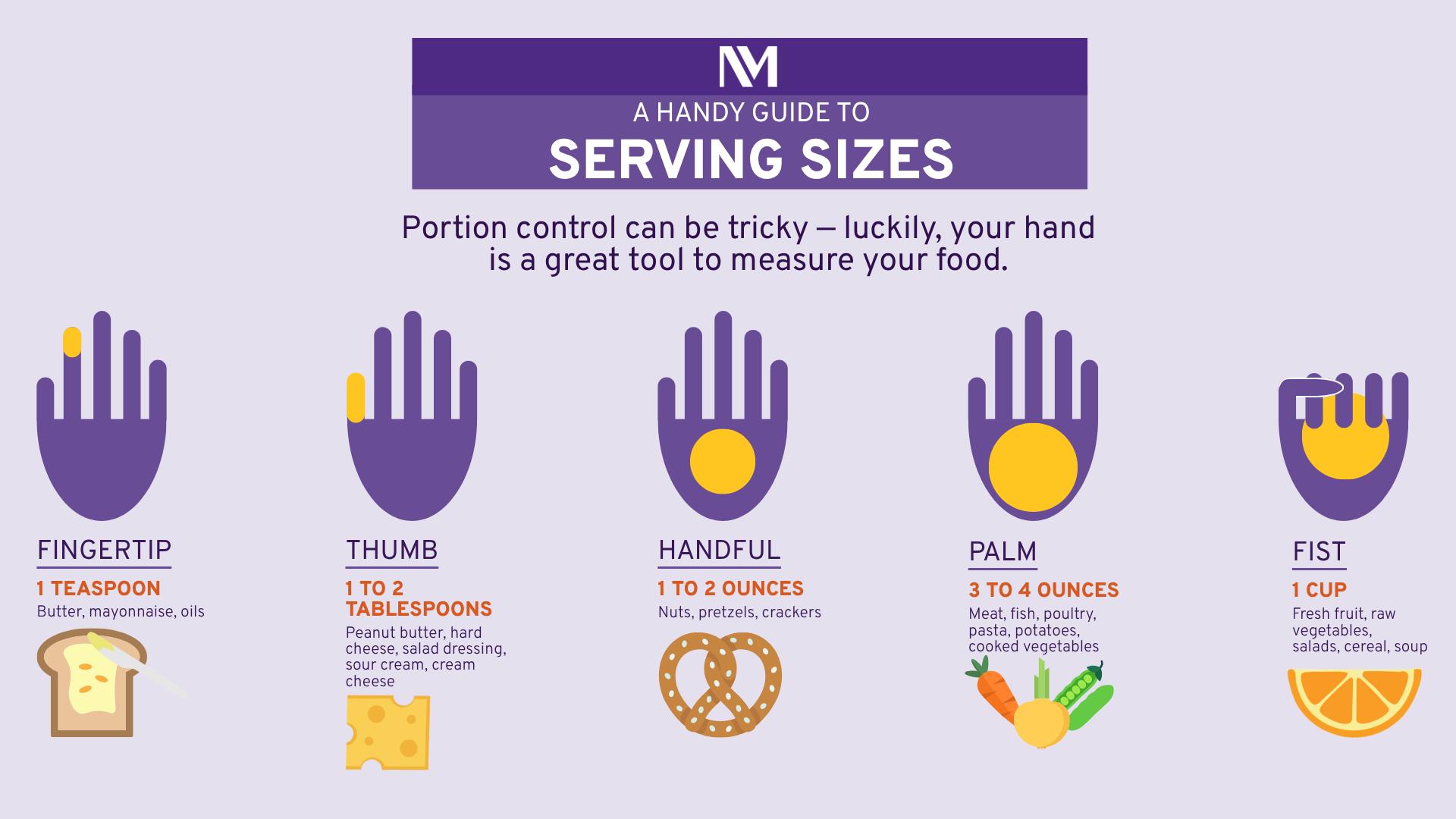
“One of the simplest ways to support a healthy diet and balanced eating habits is to measure out a serving and enjoy it mindfully,” says Hannah Gould, MS, RD, LDN, CDCES, a registered dietitian at Northwestern Medicine. “Portion food into a bowl or plate, rather than eating it directly from the package. This can help you better recognize how much you’re consuming. Slowing down, paying attention to hunger and fullness cues, and savoring the taste of the food can make it more satisfying.”
Other habits that can help you stay more aware of portion sizes:
- Read the nutrition label before eating.
- Use smaller plates or bowls.
- Fill your plate before sitting down rather than serving yourself from family-style dishes at the table.
“Choose foods that provide fiber, protein, healthy fats and volume to help you feel satisfied,” says Gould.
Fresh Foods vs. Packaged Foods
Serving sizes aren’t just helpful for packaged food. They can also help you build balanced meals with fresh foods, such as fruits and vegetables.
For many fresh foods, a typical serving looks like:
- 1 medium fruit, such as an apple or orange
- 1/2 cup of cut fruit like watermelon
- 1 cup of raw leafy vegetables
- 1/2 cup of cooked vegetables
These guidelines can make it easier to build balanced meals and snacks, even when a nutrition label isn’t available.
How the Plate Method Can Help
Another easy way to build balanced meals is to use the “plate method.” The method originated in Sweden in the 1970s as a visual tool to help with meal planning without measuring.
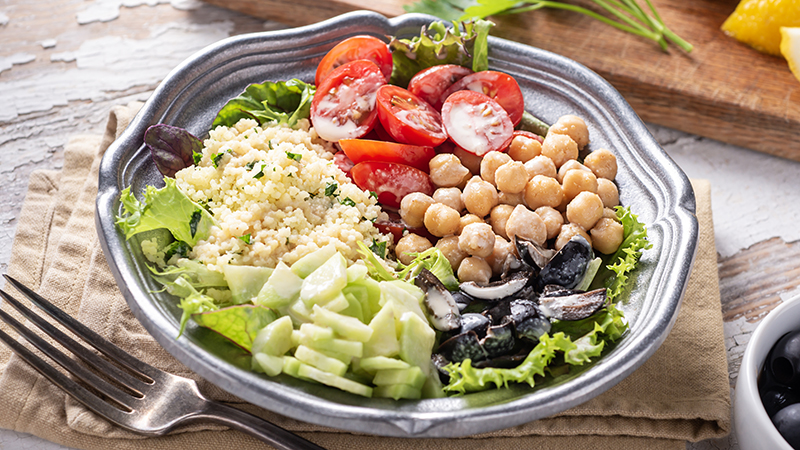
Gould recommends using the plate method’s visual approach to help guide portion sizes without needing to count calories or measure foods. The plate method divides your plate into three sections:
- Half of the plate for non-starchy vegetables, which would be any vegetable except for:
- Potatoes
- Peas
- Corn
- Winter squash
- One quarter of the plate for lean protein, such as:
- Chicken
- Turkey
- Fish
- Eggs
- Tofu
- Beans or lentils
- Lean beef
- Pork
- One quarter of the plate for high-fiber carbohydrates, such as:
- Brown rice
- Whole-wheat pasta
- Quinoa
- Starchy vegetables like potatoes, peas, corn and winter squash
“The plate method is an easy tool that helps take the guesswork out of portion size,” says Gould. “This method can support long-term healthy habits, overall wellness and serve as a formula to plan nutritious, well-balanced meals.”
How Serving Size and Portion Size Support Healthy Habits
Paying attention to serving size and portion size isn’t about restricting foods — it’s about building awareness.
Being mindful of serving sizes and portion sizes can help you:
- Make more balanced choices when eating at home, dining out or choosing packaged foods
- Better understand calories and nutrients
- Improve portion management
- Maintain a healthy weight
- Support long-term healthy eating habits
Making Portion Awareness Part of Your Routine
Understanding serving sizes and portion sizes doesn’t have to be complicated. A few simple steps, such as reading food labels, using visual cues and planning balanced meals, can make a difference.
By learning to pay attention to portions, you can build habits that support your long-term health.
If you need support getting started, a registered dietitian can help you put serving sizes and portion sizes into practice so meal planning feels more manageable.
 Chrome
 Edge
 Safari
 Firefox