


When One Lung Transplant Wasn’t Enough
How a Rare Four-Organ Transplant Helped an Iowa Mom Get Back to Her Son
Published October 2026
After her first lung transplant, Elizabeth Wehrle of Montezuma, Iowa, returned to the busy life she loved as a mom.
Then something changed.
Breathing became harder. Everyday tasks became exhausting. Her health continued to decline.
Every transplant is unique, but Elizabeth’s was extremely rare.— Satish N. Nadig, MD, PhD
What followed was a rare form of chronic lung transplant rejection and complications from cystic fibrosis that left her critically ill.
To survive, Elizabeth needed another double-lung transplant, along with a liver and kidney transplant. It’s a combination so rare that few transplant centers ever encounter a situation like hers.
“Life was great after my first double-lung transplant,” says Elizabeth. “I was a stay-at-home mom, I homeschooled my son and I was busy with all of his activities. I had my life back. But as my health deteriorated, simple daily tasks became overwhelming. There were days that I couldn’t get myself dressed because I just couldn’t breathe.”
What Happens When a Lung Transplant Begins To Fail?
For people with cystic fibrosis and other severe lung diseases, a lung transplant can be life-changing.
However, like all transplanted organs, donor lungs can sometimes be damaged by rejection. This occurs when the immune system recognizes the transplanted organ as foreign and attacks it.
“Unfortunately, she developed a rare form of rejection called restrictive allograft syndrome (RAS), which is often fatal and so high-risk that many transplant centers wouldn’t consider repeat lung transplantation,” says Ankit Bharat, MD, chief of thoracic surgery and executive director of Northwestern Medicine Canning Thoracic Institute.
While chronic rejection can affect lung transplant recipients, Elizabeth’s form of rejection was especially aggressive.
At the same time, years of complications from cystic fibrosis had affected Elizabeth’s liver and kidney function, leaving her in need of not only new lungs, but also a liver and kidney transplant.
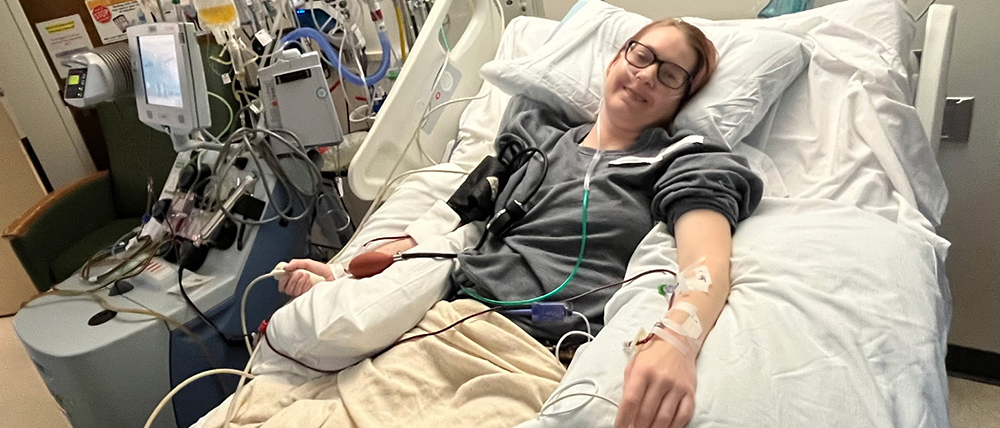
By the time she arrived at Northwestern Medicine, Elizabeth needed a ventilator and extracorporeal membrane oxygenation (ECMO), a type of life support that temporarily takes over the work of the heart and lungs.
Why a Second Lung Transplant Is So Challenging
Transplant surgery is complex under any circumstances, but repeat lung transplantation presents an even greater challenge.
Previous surgery had left Elizabeth with extensive scar tissue, making a second lung transplant far more difficult.
Elizabeth’s situation is one few transplant centers have encountered. According to the Scientific Registry of Transplant Recipients, she is the first patient in the United States to receive a quadruple-organ transplant that included retransplanted lungs.
“Retransplanting lungs is extraordinarily difficult because prior surgery can leave the chest densely scarred and the normal anatomy severely distorted,” explains Dr. Bharat.
Scar tissue from Elizabeth’s first transplant had significantly altered the normal anatomy of her chest, increasing the risk of bleeding, injury and other complications during surgery.
At the same time, surgeons needed to safely transplant four organs while minimizing stress on a patient who was already seriously ill.
A Team Approach to Complex Transplant Care
Making the surgery possible required close coordination among specialists from multiple disciplines.
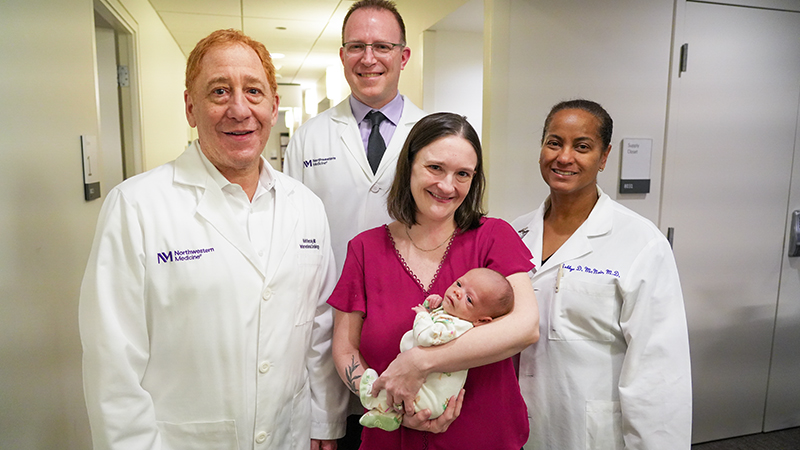
“Every transplant is unique, but Elizabeth’s was extremely rare and difficult,” says Satish N. Nadig, MD, PhD, transplant surgeon and director of the Northwestern Medicine Comprehensive Transplant Center. “This operation worked because the thoracic, abdominal transplant, anesthesia, intensive care unit, perfusion and nursing teams functioned as one coordinated team.”
The transplant team also used advanced machine perfusion technology, which helps preserve donor organs outside the body before transplantation.
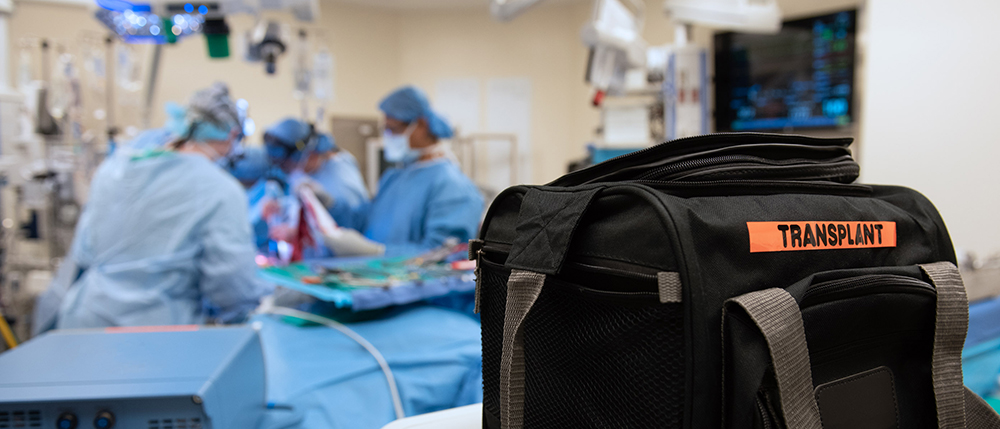
This approach allowed the thoracic surgery team to focus on the lung retransplant while the donor liver and kidney remained supported outside the body.
“The liver and kidney were on a machine perfusion pump, which was fantastic because it allowed the lung team to take their time and make sure the lungs went in safely without being on the clock for the abdominal organs,” says Dr. Nadig. “When the abdominal organs went in and blood flow was restored, they began functioning straight away.”
According to Chitaru Kurihara, MD, a thoracic surgeon and surgical director of the Lung Transplant Program at Canning Thoracic Institute, careful planning was essential.
Dr. Kurihara says the operation required close coordination between multiple surgical teams to reduce risk and minimize stress on Elizabeth’s body.
“The whole operation had to be very closely coordinated, with so many team members and two different teams working in extremely close collaboration to make sure there was no single misstep,” adds Dr. Kurihara.
A New Lease on Life
For Elizabeth, the surgery wasn’t about making history. It was about getting back to her son and the life she loved in Iowa.
“Before surgery, there was so much tightness in my chest and I couldn’t breathe,” says Elizabeth. “Almost immediately after transplant, I felt like a new person. Without my four new organs, I know I wouldn’t be here today.”
Following the transplant, Elizabeth began rebuilding her strength through rehabilitation and exercise.
She now enjoys activities that had become impossible before surgery, including taking walks, staying active and spending more time with her family.
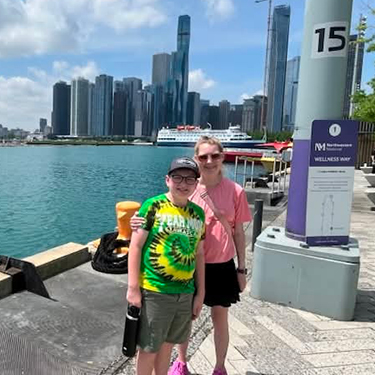
She’s also proud of the visible reminders of her journey.
“I don’t hide my scars,” says Elizabeth. “I’m looking forward to going to the swimming pool and showing off my battle scars. I earned them. They saved my life.”
The Gift Behind Every Transplant
While Elizabeth’s story shows what’s possible through modern transplant medicine and advanced surgical techniques, it also reflects the generosity of an organ donor and their family.
Without that gift, none of it would have been possible.
More than 100,000 people in the United States are waiting for an organ transplant. For many, a donor’s decision can mean the difference between life and death.
“I’m so proud of this because of the way our teams came together to anticipate every challenge and be prepared for it,” says Dr. Bharat. “There was a tremendous amount of passion to help Elizabeth. The thought of reuniting her with her child and giving her a new lease on life makes all of us incredibly happy.”
Learn more about organ and tissue donation or how to register as a donor.
Featured Experts

 Chrome
 Edge
Edge Safari
 Firefox